A diffuse axonal injury is one of the most serious brain injuries a person can suffer in a crash, and families often first hear the term from a trauma doctor in an intensive care unit waiting room. Your loved one may have no skull fracture and only a few visible bruises, yet still be unconscious or confused for days. That gap between how the person looks and how badly the brain is hurt is exactly what makes this injury so hard for families and so easy for insurers to dispute.
At Cowen Law car accident lawyers, we represent Texans who suffered catastrophic brain injuries in truck and car crashes. This guide explains what the injury is, how it is diagnosed, what recovery can look like, and how a Texas injury claim protects the family's future.
What Is a Diffuse Axonal Injury After a Car Crash?
Diffuse axonal injury is widespread tearing of the brain's nerve fibers caused when a crash violently accelerates, stops, or twists the head. It often causes immediate unconsciousness and can be missed on early brain scans.
At a Glance
These points frame everything that follows:
- This type of brain injury damages the long nerve fibers that connect different parts of the brain.
- Rapid acceleration, deceleration, and rotation in high-speed crashes are a leading cause.
- Computed tomography (CT) scans often look close to normal, while advanced magnetic resonance imaging (MRI) sequences detect the damage more reliably.
- Recovery ranges widely, from meaningful improvement to permanent disability.
- Texas injury claims for this injury generally must be filed within two years of the crash.
Because the injury is hard to see, each of these facts can become a point of dispute in an insurance claim.
What Is a Diffuse Axonal Injury?

A diffuse axonal injury is damage to axons, the long, thin fibers that carry signals between nerve cells, spread across many areas of the brain at once. It happens when different layers of brain tissue move at different speeds inside the skull, stretching and tearing those fibers.
Why Doctors Call It Diffuse
Most head injuries people picture are focal, meaning a bruise or bleed in one spot. Research summarized by the National Library of Medicine describes how rapid acceleration and deceleration, especially in more than one direction, creates shear forces across brain tissue. The damage is scattered rather than concentrated, so it can disrupt thinking, movement, and consciousness all at once.
The head does not have to strike anything for this to happen. A sudden stop or violent spin can injure the brain even when a seat belt and airbag keep the person from hitting the steering wheel or window.
Why Car and Truck Crashes Cause Diffuse Axonal Injury
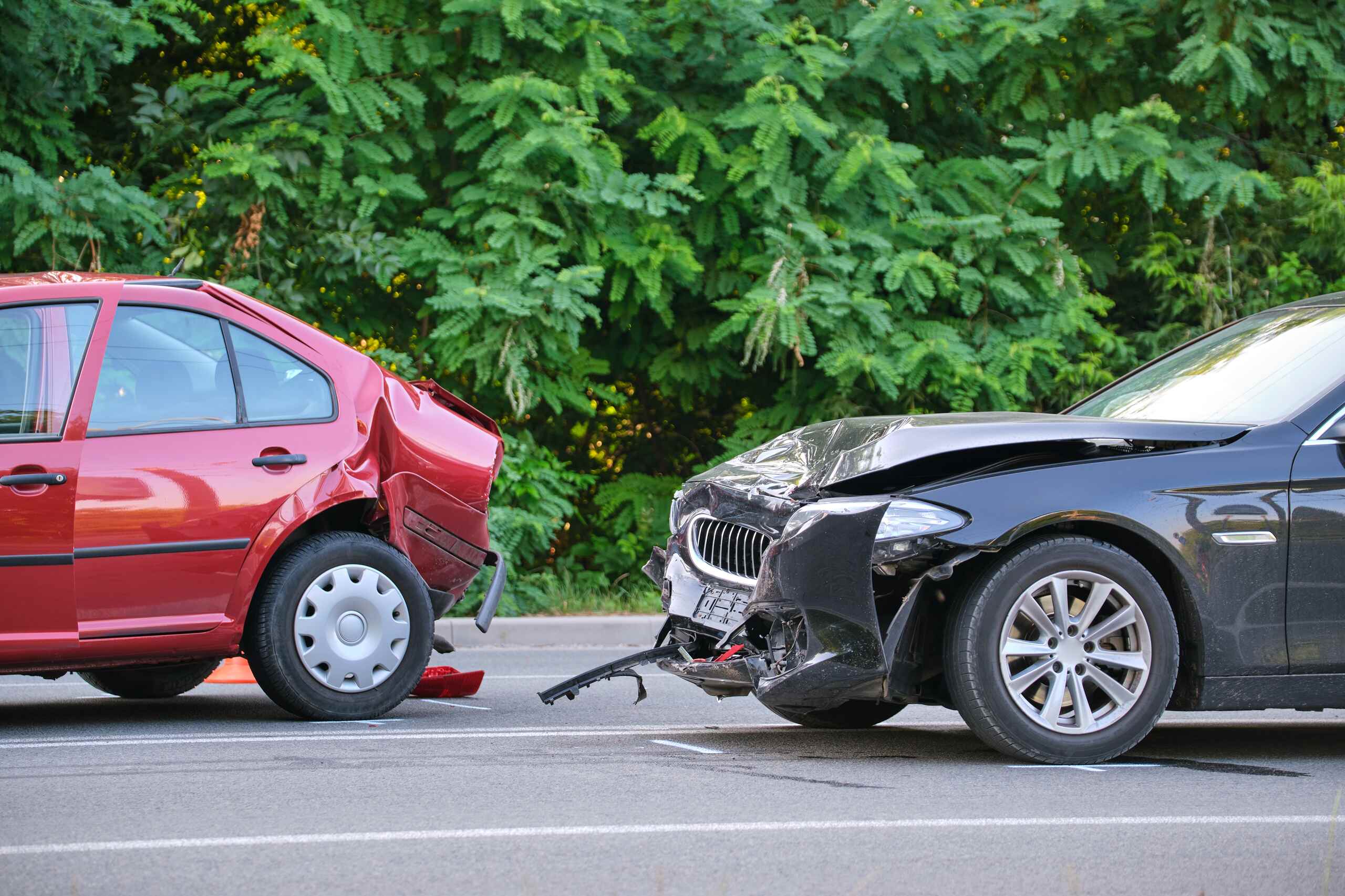
High-speed motor vehicle crashes are the most common cause of this injury, according to a case report and review published through the National Center for Biotechnology Information. The forces rise with the change in speed, which is why collisions with heavy commercial trucks are especially dangerous for people in passenger cars.
Crash patterns that commonly produce rapid rotation and sudden stops include:
- High-speed frontal and rear-end collisions, where the head whips forward and back
- Side-impact or T-bone crashes, where the head moves sideways with little protection
- Rollovers, where the head twists in several directions as the vehicle tumbles
- Underride crashes, where a car slides beneath a trailer and stops almost instantly
The crash pattern matters later, because reconstruction of the forces involved helps connect the collision to an injury that may not appear on a scan.
How Is Diffuse Axonal Injury Diagnosed?
Doctors diagnose this injury by combining the patient's condition, especially loss of consciousness, with brain imaging. CT scans are fast and good at finding bleeding that needs surgery, but the same medical literature notes that CT findings in axonal injury are often subtle.
MRI is more sensitive, particularly sequences called susceptibility-weighted imaging, which detects tiny bleeds, and diffusion tensor imaging, which maps damage along nerve pathways. Physicians commonly describe severity using a three-level grading system based on where the injury appears:
| Grade | Where damage appears | What it generally indicates |
|---|---|---|
| Grade 1 | White matter of the brain hemispheres, often where gray and white matter meet | The least extensive pattern, though symptoms can still be significant |
| Grade 2 | Grade 1 areas plus the corpus callosum, the band connecting the two halves of the brain | Deeper injury, often with a longer period of impaired consciousness |
| Grade 3 | Grade 2 areas plus the brainstem | The most severe pattern, frequently linked to prolonged coma |
The grade is only one piece of the picture. Doctors weigh it alongside age, the Glasgow Coma Scale score in the emergency room, other brain injuries, and how the patient responds in the first weeks.
Diffuse Axonal Injury Recovery: What Families Can Expect
Recovery varies widely, and no scan can promise a family a specific outcome. A study of 133 patients with this diagnosis, published in the PubMed Central archive, found that outcomes tracked closely with how severe the injury was on arrival, and patients with severe head injuries had higher mortality.
The Stages Families Often Move Through
Many people with moderate to severe injuries move from coma to a period of confusion and memory loss, then into inpatient rehabilitation. Progress is often fastest in the first months and can continue more slowly for a long time afterward.
Lasting Effects That Change Daily Life
Even after someone walks and talks again, changes like these commonly remain:
- Slower thinking and trouble focusing or following conversations
- Memory problems, especially with new information
- Personality and mood changes, including irritability or depression
- Balance, coordination, and speech difficulties
- Severe fatigue that limits work and family life
These effects are why family members are often the most important witnesses in a brain injury case. They see the difference between the person before the crash and the person afterward in ways a single medical visit cannot capture.
Can You File a Diffuse Axonal Injury Lawsuit in Texas?
Yes, a person with this brain injury can file a Texas lawsuit against the driver or company whose negligence caused the crash. When the injured person cannot manage their own affairs, a guardian or other legal representative may need to bring the claim for them.
Claims Against Trucking Companies
When a commercial truck causes the crash, the motor carrier may be responsible along with its driver. Trucking cases can also involve federal safety records, such as driver hours and maintenance logs, that show why the crash happened.
How Fault Can Reduce the Recovery
Texas uses a modified comparative fault system under Civil Practice and Remedies Code Chapter 33, which bars recovery if the injured person is more than 50% responsible and otherwise reduces damages by that person's percentage. If a jury values a brain injury claim at $3 million and finds the injured driver 10% at fault, the recovery becomes $2.7 million.
Insurers frequently raise seat belt use in brain injury cases. The Supreme Court of Texas held in 2015, in Nabors Well Services v. Romero, that evidence of not wearing a seat belt can be considered when it is relevant to causing the injury, so that issue should be investigated early.
What a Diffuse Axonal Injury Claim Can Include
A Texas brain injury claim is built around the full lifetime cost of the injury, not only the first hospital bill. Common categories of damages include:
- Past and future medical care, including surgery, rehabilitation, and long-term therapy
- A life care plan covering attendant care, home changes, equipment, and medication
- Lost wages and lost ability to earn a living in the future
- Physical impairment, pain, and mental anguish
- A spouse's loss of companionship when the injury seriously and permanently changes the marriage
Texas limits recovery of medical expenses to the amounts actually paid or incurred under Civil Practice and Remedies Code Section 41.0105, so accurate billing records matter. Future care costs are proven through physicians, life care planners, and economists.
When Insurance Is Not Enough
A lifetime of brain injury care can quickly exceed a minimum personal auto policy. Interstate trucking companies hauling general freight generally must carry at least $750,000 in liability coverage under 49 C.F.R. Section 387.9, far more than the $30,000 per-person minimum for Texas drivers.
Even that amount can fall short of a lifetime of care, so an employer's policy, excess coverage, and the injured person's own underinsured motorist coverage can all become important sources of payment.
Evidence That Makes an Invisible Injury Visible
Proving an axonal injury means connecting medical findings to the crash and to real changes in the person's life. The strongest cases draw on several kinds of proof at once.
Medical and Crash Evidence
Emergency medical service and emergency room records document early loss of consciousness and Glasgow Coma Scale scores, while follow-up MRI shows where the damage occurred. Vehicle event data, dashcam footage, and damage to the vehicles help show the forces involved, and neuropsychological testing compares the person's memory, attention, and processing speed against expected norms.
Evidence From Family, Friends, and Coworkers
Statements from family, coworkers, and friends describe changes in memory, mood, and independence. A simple daily journal kept by a spouse or parent can become one of the most persuasive records in the case.
How Long Do You Have to File a Brain Injury Claim in Texas?
Most Texas personal injury lawsuits, including brain injury claims, must be filed within two years of the crash under Civil Practice and Remedies Code Section 16.003. If the injured person dies, a wrongful death claim generally has two years from the date of death.
Exceptions Families Should Not Rely On
Texas law can pause the deadline for a person who is under 18 or of unsound mind when the claim arises. Whether a coma or severe cognitive injury qualifies depends on the facts, so families are safest treating the two-year deadline as firm.
FAQs: Diffuse Axonal Injury
Families dealing with this diagnosis often ask these questions.
Is diffuse axonal injury the same as a concussion?
No, diffuse axonal injury and concussion are not the same, though both involve brain injury from rapid movement of the head. A concussion is generally a milder, temporary disruption, while diffuse axonal injury involves physical tearing of nerve fibers and is usually far more severe.
Can a person with diffuse axonal injury wake up from a coma?
Yes, some people with diffuse axonal injury regain consciousness, including some with brainstem involvement, but the timing and extent vary widely. A longer coma and deeper injury on MRI are generally linked to a harder recovery, and treating doctors are the right source for an individual prognosis.
What kind of doctor treats diffuse axonal injury?
This brain injury is usually treated first by neurosurgeons and critical care physicians in a trauma intensive care unit. Long-term care commonly involves physical medicine and rehabilitation physicians, neurologists, neuropsychologists, and physical, occupational, and speech therapists.
Can diffuse axonal injury get worse after the crash?
The injury can appear worse in the days after a crash because damaged nerve fibers continue to break down and swelling can develop. Doctors monitor patients closely for these secondary changes, which is one reason repeat imaging and prompt treatment matter.
How much is a diffuse axonal injury settlement worth in Texas?
No fixed amount applies to a settlement for this injury in Texas, because value depends on the severity of the injury, future care costs, lost earning ability, fault, and available insurance. Cases involving permanent disability tend to carry higher value because decades of care and lost income must be proven and paid.
Talk With Cowen Law About a Brain Injury From a Crash
Cowen Law builds brain injury cases on medical proof, from imaging and testing to life care plans that account for every year ahead. Michael Cowen has been Board Certified in Personal Injury Trial Law by the Texas Board of Legal Specialization since 2001 and has tried more than 120 jury trials, and Malorie Peacock is Board Certified in Truck Accident Law.
If someone you love suffered this kind of brain injury in a Texas car or truck crash, we can explain the claim and what it should cover. Consultations are free in English and Spanish, there is no cost to you unless we recover, and every case depends on its own facts.
Call (210) 941-1306, Monday through Friday from 8:30 a.m. to 5:30 p.m.
Schedule A Free Case Consultation
Cowen Law - Texas Office
Address: 6243 I-10 #801, San Antonio, TX 78201
Contact No: (210) 941-1306