If you were hurt in a cab or hit by one, a San Antonio taxi accident lawyer can tell you something most people never expect: a taxi may carry far less insurance than an Uber. Cowen Law Car & Truck Accident Lawyers represents taxi passengers, drivers, and pedestrians hurt in cab crashes across San Antonio, and we know how to find every source of coverage when the cab's policy falls short.
Taxis in San Antonio are regulated by the City, not by the state rules that govern rideshare companies. Those City rules shape who is responsible and how much insurance is on the table for you.
Consultations are free. Call (210) 941-1306 to talk with our San Antonio office.
Call us at (210) 941-1306 for a free consultation or contact us below. No cost to you unless we win.
How Much Insurance Do San Antonio Taxis Carry?
San Antonio generally requires taxicabs to carry only the state minimum amount of liability insurance. Under Section 33-925 of the City Code, a taxi company must meet the state minimums for injury, death, and property damage, which the Texas Transportation Code sets at $30,000 per person, $60,000 per crash, and $25,000 for property.
That can be much less than other vehicles for hire in the same city:
| Type of vehicle for hire | Minimum liability coverage | Source |
|---|---|---|
| San Antonio taxicab | State minimum: $30,000 per person, $60,000 per crash, $25,000 property | City Code Section 33-925 and Transportation Code Section 601.072 |
| San Antonio limousine (15 passengers or fewer) | $500,000 combined single limit | City Code Section 33-519 |
| Rideshare vehicle during a trip | $1 million per incident | Insurance Code Section 1954.053 |
These are minimums, and some cab companies carry more. When a taxi's policy is too small for serious injuries, the gap has to be filled from other sources, which is why the rest of the coverage picture matters so much in these cases.
When the Taxi Company Is Self-Insured
Section 33-924 allows a taxi company to qualify as a self-insurer instead of buying a policy. In that case, the company itself pays claims up to the required amounts, and the claim is handled by the company or its claims administrator rather than a traditional insurer. A self-insured company must still meet the City's coverage requirements, so the same minimum amounts apply.
Who Is Responsible After a San Antonio Taxi Crash?
A taxi crash can involve several parties, depending on who caused it and how the cab company is organized. Those who may share responsibility include:
- The taxi driver, for speeding, distraction, or unsafe pickups and drop-offs
- The taxi company that holds the City operating permit
- An owner-operator who owns and drives a single permitted cab
- Another driver who hit the taxi
- A repair shop or company responsible for the cab's maintenance
Many San Antonio cab drivers work as independent contractors rather than employees. Under Section 33-972 of the City Code, a permit holder that contracts with drivers this way must make sure the driver is insured under the holder's policy, which helps connect the driver's conduct to the company's coverage. Smaller cab owners may also operate through a City-approved association, and that association's role can matter when coverage is tight.
How Do Taxi Accidents Happen in San Antonio?
Most taxi crashes trace back to the way cab drivers work: constant stops, long hours, and pressure to pick up the next fare. Three patterns come up often.
Sudden Pickups and Drop-Offs
Cab drivers often swerve to the curb when they spot a fare or stop in a travel lane to let a passenger out. Those moves catch following drivers off guard and put passengers stepping out of the cab at risk from passing traffic.
Long Shifts and Fatigue
Many cab drivers lease their vehicles and work long shifts to cover those costs. A tired driver late in a shift reacts more slowly, and dispatch and trip records can show how long the driver had been working that day.
Vehicle Condition
Taxis rack up high mileage quickly, which wears out brakes, tires, and suspension. The City requires inspections and sets vehicle standards, and inspection records can show whether a cab should have been on the road that day.
Injured as a Taxi Passenger in San Antonio
Taxi passengers usually have the clearest path to a claim, because they were not driving and rarely share any fault. The question is less about who caused the crash and more about how much coverage is available.
The Duty Owed to Passengers
Texas law has long held carriers that transport passengers for pay to a high standard of care for their passengers' safety. A cab company that puts an unsafe vehicle on the road or keeps a reckless driver working can be responsible for its own choices, not only the driver's.
Using Your Own Coverage as a Passenger
If you have your own auto policy, its personal injury protection may help with medical bills and lost wages regardless of fault. Your underinsured motorist coverage under Texas Insurance Code Chapter 1952 may also apply when the at-fault vehicle's coverage is too small, even though you were riding in someone else's car. Health insurance can also cover treatment while the claim is pending.
Taxi Crashes at the Airport, Downtown, and Event Venues
Taxi traffic in San Antonio concentrates in a few places, and each brings its own risks. Knowing where the crash happened helps identify the permit type, the cameras, and the records that matter.
San Antonio International Airport
The City issues separate airport taxi permits, and cabs line up and pull into busy pickup lanes alongside shuttles, rental cars, and private drivers. Crashes near the terminal often involve sudden lane changes and drivers watching for fares instead of traffic.
Downtown and the River Walk
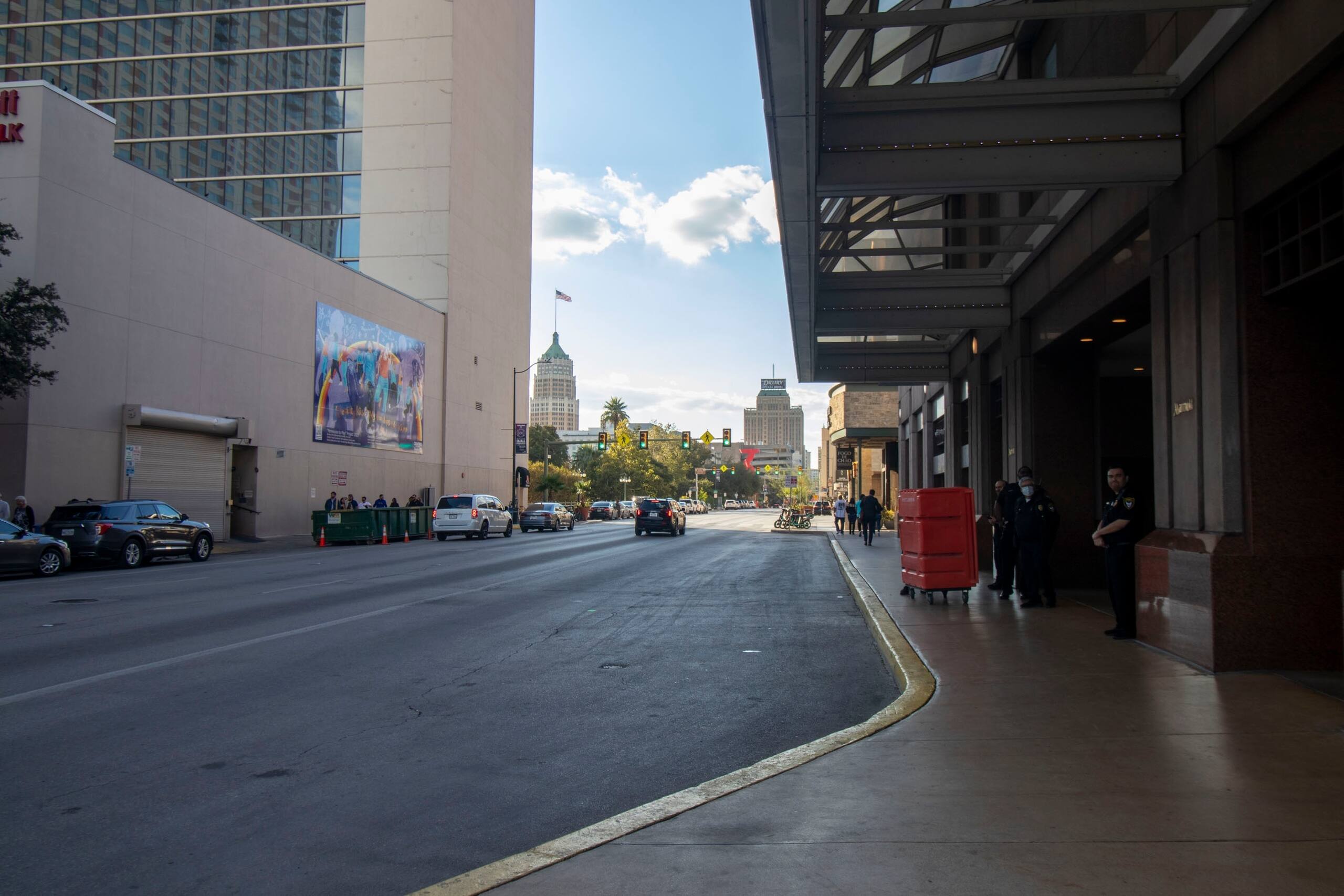
Downtown streets carry heavy pedestrian traffic, one-way streets, and frequent curbside stops. A cab stopping abruptly to pick up a fare or turning across a crosswalk can injure pedestrians and other drivers alike, especially at night when visibility is lower.
Games, Concerts, and Fiesta
Events at the Alamodome and other venues, and Fiesta celebrations each spring, bring surges of cabs, rideshare vehicles, and pedestrians into the same few blocks. Crowded streets and late-night traffic increase the risk of pickup and drop-off crashes, especially after events end.
Evidence That Matters in a Taxi Accident Case
Taxi companies and the City keep records that ordinary drivers do not, and those records can prove what happened and who was responsible. The evidence we move to secure includes:
- Meter and trip records showing the start time, route, and fare
- Dispatch logs and GPS data from the cab company's system
- The driver's City permit history and any prior violations
- Vehicle inspection records required by the City
- In-cab or dashcam video, if the cab was equipped with a camera
- Credit card receipts and ride confirmations that fix the exact time
A receipt or ride confirmation in your phone can be surprisingly important. It proves you were a passenger in a specific cab at a specific time, which cuts off arguments about who was involved. The City's permit records can also confirm which company held the permit for that cab on the day of the crash.
What Compensation Is Available After a Taxi Crash?
A taxi accident claim can include medical bills, future care, lost wages, reduced earning capacity, physical pain, mental anguish, and physical impairment. Visitors to San Antonio who are hurt in a cab can bring the same claims as local residents.
When a Crash Is Fatal
When a taxi crash takes a life, the surviving spouse, children, and parents can bring a wrongful death claim. We handle those cases with the care a grieving family deserves, including families who live outside Texas and lost someone during a visit.
Deadlines and Shared Fault in Taxi Accident Claims
Taxi claims follow the same Texas deadline and fault rules as other crash cases. Passengers rarely face fault arguments, but drivers and pedestrians often do.
The Two-Year Filing Deadline
Most Texas injury claims must be filed within two years under Civil Practice and Remedies Code Section 16.003. Exceptions can apply, such as tolling for injured children, but waiting also risks losing dispatch and GPS data.
When the Cab Company Blames You
Under Civil Practice and Remedies Code Chapter 33, a recovery is reduced by your share of fault and barred above 50%. If a jury values a pedestrian's claim at $120,000 and finds the pedestrian 25% at fault for crossing mid-block, the recovery becomes $90,000.
Why Injured Riders Choose Cowen Law After a Taxi Crash
Taxi claims often come down to finding enough coverage, and that takes a firm that knows how commercial vehicle insurance, City permits, and your own policy fit together. Cowen Law handles vehicle-for-hire crashes with the same trial preparation we bring to our truck cases.
- Michael Cowen has been Board Certified in Personal Injury Trial Law by the Texas Board of Legal Specialization since 2001 and has tried more than 120 jury trials.
- Michael Cowen and Malorie Peacock are Board Certified in Truck Accident Law.
- Our published results include a $14 million personal injury case and an $8 million company vehicle case.
- Consultations are free and available in English and Spanish, and you work directly with an attorney.
Those results came from their own facts, and past outcomes do not predict the result of another case. We work on contingency, so there is no cost to you unless we win.
Schedule a free consultation to find out what coverage may be available after your taxi crash.
FAQs: San Antonio Taxi Accident Lawyer
These are common questions from passengers, drivers, and pedestrians hurt in or by taxis in San Antonio.
Can I sue a taxi company if I was hurt as a passenger in San Antonio?
Yes, a passenger hurt in a San Antonio taxi crash can bring a claim against the taxi company and driver if the cab driver caused the crash, or against another driver who did. The taxi company may be responsible for the driver's conduct and for its own choices about vehicles and drivers.
Is a taxi accident claim different from an Uber claim?
Yes, a San Antonio taxi claim is governed by City vehicle-for-hire rules rather than the state rideshare insurance law, so the required coverage is often much lower. Taxi companies also do not have app-based arbitration terms like Uber's, which can make it simpler to bring a claim in court.
What should I do after being hurt in a taxi?
After a taxi crash in San Antonio, get medical care, write down the cab company name and vehicle number, photograph the driver's City permit if it is displayed, and keep your receipt or ride confirmation. Request the crash report and avoid giving a recorded statement to the cab company's insurer before getting legal advice.
Does my own car insurance cover me as a taxi passenger?
Often, yes, because Texas auto policies usually extend personal injury protection and underinsured motorist coverage to the policyholder even when riding in another vehicle. Those coverages can help when the taxi's insurance is too small for your injuries.
What if a taxi hit me while I was walking downtown?
A pedestrian hit by a taxi in San Antonio can bring a claim against the driver and the taxi company's insurance or self-insurance. Your own underinsured motorist coverage may also apply, and nearby business and traffic cameras downtown can help prove what happened.
Talk to a San Antonio Cab Accident Attorney

Cab company dispatch and GPS records are not kept forever, and taxi coverage is often thin. Reaching out early gives us time to secure the evidence and identify every policy that can help pay for your recovery.
Call Cowen Law at (210) 941-1306, Monday through Friday from 8:30 a.m. to 5:30 p.m., for a free consultation in English or Spanish. There is no cost to you unless we win.
Schedule A Free Case Consultation
Cowen Law - Texas Office
Address: 6243 I-10 #801, San Antonio, TX 78201
Contact No: (210) 941-1306