A loaded dump truck can weigh several times more than a passenger car, and when one crashes on a San Antonio road, a San Antonio dump truck accident lawyer has to sort out a web of owner-operators, haulers, brokers, and the companies that hired them. Cowen Law Car & Truck Accident Lawyers, The Trucking Trial Lawyers™, represents people hurt in dump truck and gravel truck crashes across San Antonio and Bexar County.
Quarries north of the city and steady road and development projects along Loop 1604, US 281, and I-10 keep loaded dump trucks moving through commuter traffic. Those trucks carry loads that can shift, spill, or fly off onto the cars behind them.
Consultations are free. Call (210) 941-1306 to talk with our San Antonio office.
Call us at (210) 941-1306 for a free consultation or contact us below. No cost to you unless we win.
Why Dump Truck Crashes Are Different
Dump trucks combine heavy, top-loaded cargo with short trips, frequent stops, and drivers who are often paid by the load. That mix creates hazards other trucks do not share, especially on busy San Antonio commuter routes.
Weight and Stopping Distance
A full dump truck needs far more room to stop than a car, and worn or poorly adjusted brakes make that distance longer. Overloaded trucks strain brakes and tires even more, which is why the truck's weight at the time of the crash is often one of the first facts we investigate.
A High Center of Gravity
Aggregate, dirt, and asphalt sit high in the bed, so a dump truck can tip on a tight curve, a ramp, or a sudden swerve. A load that is uneven or shifts in transit makes a rollover even more likely.
Early Starts and Long Days
Hauling often starts before sunrise so trucks can reach job sites when work begins, and drivers may make trip after trip until dark. Fatigue builds over those long days, and a tired driver in a heavy truck has little room for a late reaction.
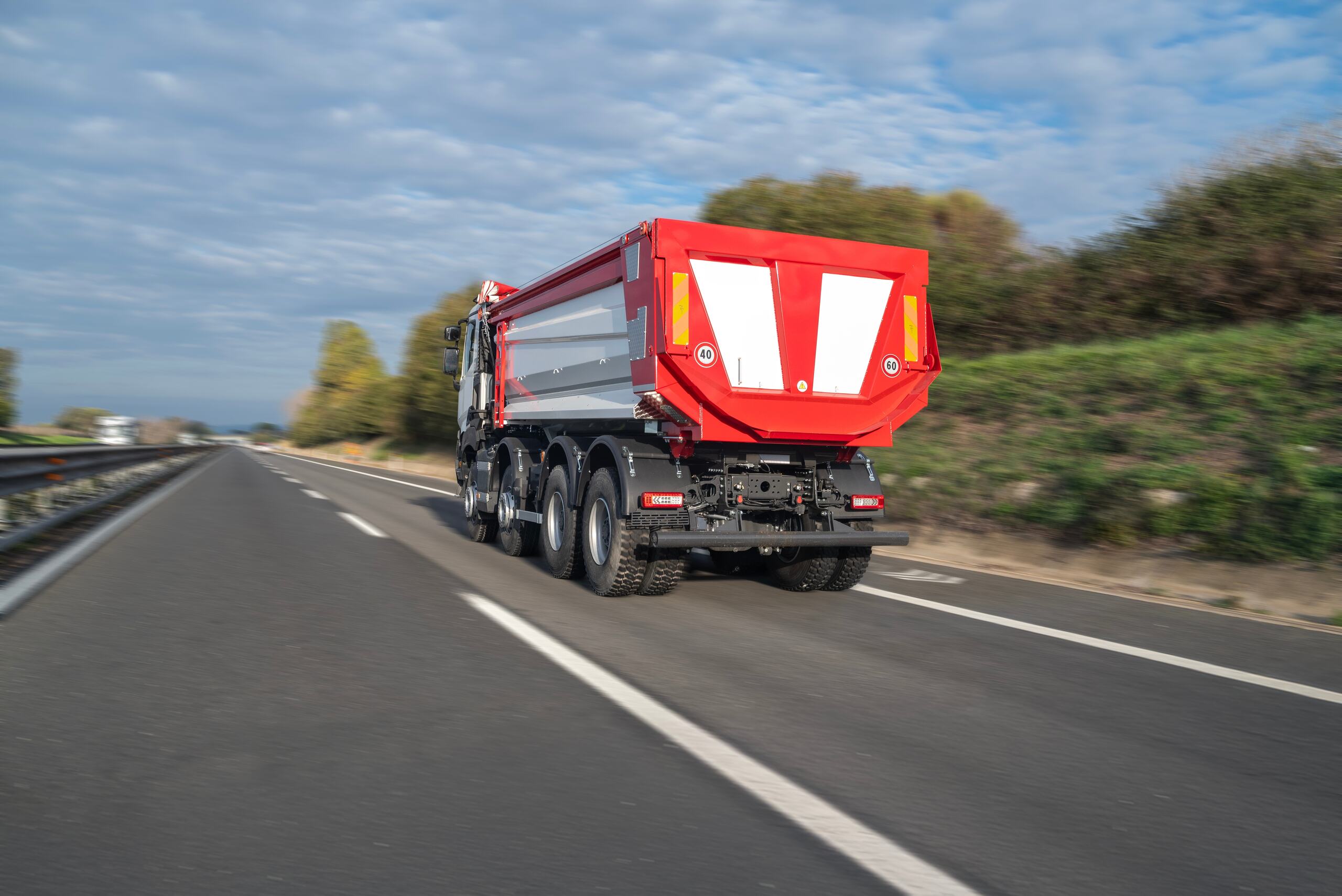
Texas Rules for Gravel, Sand, and Other Loose Loads
Texas law requires trucks hauling loose material to keep it from blowing or spilling onto the road. Under Texas Transportation Code Chapter 725, a commercial vehicle carrying loose material generally must:
- Cover the load with a covering firmly secured at the front and back, unless the load is completely enclosed (Section 725.021)
- Keep the tailgate securely closed during transport
- Be equipped and maintained to prevent material from escaping
- Remove spilled material and residue from bumpers, frames, and other parts that do not carry the load before driving on a public highway (Section 725.022)
Interstate carriers face similar federal requirements to prevent cargo from leaking, spilling, or blowing under 49 C.F.R. Section 393.100. An uncovered load or an unlatched tailgate is often the clearest evidence that a hauler failed to follow the rules.
Who Can Be Held Responsible After a San Antonio Dump Truck Crash?
Dump truck work is often layered, with one company hiring another to haul material and an owner-operator actually driving the truck. The parties that may share responsibility include:
| Party | How they may share responsibility |
|---|---|
| The driver | Speeding, following too closely, unsafe turns, or driving with the bed raised |
| The hauling company or owner-operator | Hiring, training, maintenance, and loading practices |
| A broker or dispatcher | Choosing an unsafe hauler or setting unrealistic load schedules |
| The quarry or loading site | Overloading the truck or sending it out without a cover |
| The company that hired the hauler | Controlling how the hauling was done or knowingly hiring an unsafe hauler |
| A government owner | City, county, or state dump trucks, subject to the Texas Tort Claims Act |
Not every party on this list will be responsible in a given crash. Load tickets, hauling contracts, and dispatch records usually show who controlled the truck and the load, and we request them early.
How Do Dump Truck Accidents Happen in San Antonio?
Dump truck crashes tend to follow a handful of patterns tied to the truck's weight and its work. The crashes we see most often include:
- Rear-end collisions when a heavy truck cannot stop in traffic on the loops or access roads
- Rollovers on ramps, curves, and uneven shoulders
- Rocks, gravel, or debris flying from an uncovered load and striking windshields
- Trucks pulling out of work zones or quarry entrances into fast traffic
- Wide right turns into cars or cyclists on the right side
- Raised beds striking overpasses, signs, or power lines
Many of these crashes trace back to pay-by-the-load pressure. Drivers who earn more by hauling more loads per day have a reason to speed, skip inspections, and pile on extra weight. Records of how many loads a driver hauled that day can show that pressure at work.
Flying Rocks and Spilled Gravel Claims
A rock that flies off a dump truck at highway speed can shatter a windshield and seriously injure a driver or passenger. These claims can be valid, but they are some of the hardest to prove. Texas's loose-load rules help, because an uncovered load is itself a violation of state law.
Proving Where the Debris Came From
The key question is whether the debris came from a specific truck that failed to cover or contain its load. Dashcam video, the truck's company name or unit number, and witnesses who saw the load uncovered make the difference, because an insurer will argue the rock was simply kicked up from the road.
When the Truck Keeps Going
Drivers often never realize debris left their truck, so they rarely stop. Writing down the company name, truck number, and direction of travel, and reporting it to police, gives investigators a way to find the truck later.
City, County, and State Dump Trucks
When a public entity owns the dump truck, the claim falls under the Texas Tort Claims Act, which adds notice deadlines and damage caps. Road departments at the city, county, and state level all operate dump trucks in and around San Antonio.
Notice Deadlines for Public Trucks
The Tort Claims Act generally requires written notice within six months, and the City of San Antonio's charter requires written notice within 90 days. A private contractor working on a public road project is not protected by those rules, so identifying the true owner of the truck comes first. Public entities are also protected by damage caps under Section 101.023, which limit what they pay.
Fault, Insurance, and Compensation in Dump Truck Claims
A dump truck claim can include medical expenses, future care, lost income, reduced earning capacity, physical pain, mental anguish, and physical impairment. How much of that can actually be recovered depends on fault and on the insurance behind the truck.
When the Hauler Blames You
Under Texas's proportionate responsibility rules in Civil Practice and Remedies Code Chapter 33, a recovery is reduced by your share of fault and barred above 50%. If a jury values your losses at $500,000 and finds you 10% at fault for changing lanes in front of the truck, your recovery would be $450,000.
Layers of Commercial Coverage
Owner-operators, hauling companies, and the contractors that hire them may each carry their own commercial policies. Hauling contracts often require the hauler to carry insurance and name the hiring company as an additional insured, which can open more than one source of payment.
Catastrophic and Fatal Injuries
The weight of a loaded dump truck means that many of these crashes cause brain injuries, spinal cord damage, or death. When a crash takes a life, the surviving spouse, children, and parents can bring a wrongful death claim, and we handle those cases with the patience and care a grieving family deserves.
Evidence That Wins Dump Truck Cases
Dump truck cases often turn on paperwork created at the quarry or job site before the truck ever reached the road. The records we move to preserve include:
- Scale and load tickets showing how much the truck was carrying
- Photos or video showing whether the load was covered
- Engine control module data on speed and braking
- Broker, dispatch, and hauling contract records
- Brake inspection and maintenance history
- The driver's license, training, and prior crash history
Scale tickets can be especially powerful because they record the truck's weight minutes before the crash. That single document can show an overloaded truck and the company that sent it out. We also look for dashcam video from other drivers and cameras near quarry entrances, where many of these crashes begin.
Why San Antonio Families Choose Cowen Law After a Dump Truck Crash
Heavy truck litigation is the center of our practice, and dump truck cases draw on the same skills: reading load records, finding the companies behind the driver, and preparing every case for trial. Insurers for haulers and contractors know the difference between a firm that settles quickly and one that goes to verdict.
- Michael Cowen and Malorie Peacock are Board Certified in Truck Accident Law.
- Michael Cowen has been Board Certified in Personal Injury Trial Law by the Texas Board of Legal Specialization since 2001 and has tried more than 120 jury trials.
- Our firm has handled more than 1,000 trucking cases, with published trucking results that include $11.65 million and $11.39 million recoveries.
- Consultations are free and available in English and Spanish, and you work directly with an attorney throughout your case.
Those results came from their own facts, and past outcomes do not predict the result of another case. We work on contingency, so there is no cost to you unless we win.
Schedule a free consultation to find out who may share responsibility for your dump truck crash.
FAQs: San Antonio Dump Truck Accident Lawyer
These are common questions from people hurt in dump truck and gravel truck crashes in San Antonio and Bexar County.
What should I do if a rock from a dump truck hit my windshield?
If a rock from a dump truck hit your windshield in San Antonio, pull over safely, write down the truck's company name, unit number, and direction, and photograph the damage. Report it to police and your insurer, and save any dashcam footage, because proof of the specific truck is what makes the claim possible.
Do dump truck drivers need a CDL in Texas?
Most dump truck drivers in Texas need a commercial driver's license, because many dump trucks exceed the 26,000-pound weight threshold in Texas Transportation Code Chapter 522. A driver operating without the required license can support claims against the company that put them on the road.
Who pays if the dump truck driver was an owner-operator?
When an owner-operator drives a dump truck in Texas, the owner-operator's commercial policy usually pays first. The company that hired or dispatched the truck may also be responsible if it controlled the work or knowingly hired an unsafe hauler.
What if gravel left on the road caused my crash?
If gravel or debris spilled by a dump truck caused a crash in Texas, the hauler may be responsible for failing to contain the load or clean spilled material from the truck. Identifying which truck left the material is the main challenge, so nearby cameras and witnesses matter.
How long do I have to file a dump truck accident claim in San Antonio?
Most dump truck injury claims in Texas must be filed within two years under Civil Practice and Remedies Code Section 16.003. Claims involving a City of San Antonio truck also require written notice within 90 days.
Talk to a San Antonio Gravel Truck Accident Attorney

Scale tickets, dispatch logs, and truck data can disappear as the hauling season moves on. Reaching out early lets us secure the records that show who loaded the truck, who sent it out, and why it crashed.
Call Cowen Law at (210) 941-1306, Monday through Friday from 8:30 a.m. to 5:30 p.m., for a free consultation in English or Spanish. There is no cost to you unless we win.
Schedule A Free Case Consultation
Cowen Law - Texas Office
Address: 6243 I-10 #801, San Antonio, TX 78201
Contact No: (210) 941-1306