A left-turn crash often begins with two competing stories. The turning driver claims the road was clear. The oncoming driver insists there was no time to stop.
Cowen | Rodriguez | Peacock does not let an insurance company choose the easier version. We secure video, signal records, vehicle data, phone evidence, and witness accounts. Then we determine who created the danger and prepare the claim for trial when the insurer refuses accountability.
The Turn That Changes the Case
- A driver turning left must yield to oncoming vehicles that are already in the intersection or close enough to create an immediate hazard.
- The turning driver is not automatically responsible in every collision.
- An oncoming driver can share fault for speeding, running a light, distraction, or another unsafe act.
- A green arrow, yellow light, driveway entrance, or multi-vehicle impact can change the fault analysis.
- Video, vehicle data, signal timing, and physical evidence carry more weight than an insurer’s early assumptions.
- Texas reduces compensation when the injured person shares responsibility.
Who is at fault in a left-turn accident in Texas?
The driver making the left turn is usually at fault when they cross the path of oncoming traffic, but speeding, distraction, signal violations, and other evidence can shift or divide responsibility.
Who Is Usually at Fault for a Left-Turn Accident in Texas?
The left-turning driver is usually at fault when they cross in front of oncoming traffic without enough time or space to complete the turn safely. Texas law places the initial duty to yield on the person making the turn.
The Turning Driver Must Yield to an Immediate Hazard
The Texas Transportation Code rules for turns and right of way require a driver turning left at an intersection, alley, private road, or driveway to yield to an approaching vehicle that is already in the intersection or close enough to create an immediate hazard.
The turning driver must accurately judge:
- The speed of the approaching vehicle
- The distance available to complete the turn
- The width of the intersection
- The number of lanes being crossed
- Visibility, weather, and lighting
- Pedestrians or cyclists in the intended path
- Whether traffic is slowing or accelerating
A driver who guesses wrong can be responsible for the resulting collision.
The Oncoming Driver Still Has Legal Duties
The right of way is not permission to drive carelessly. An approaching driver must obey the speed limit, follow traffic signals, keep a proper lookout, and respond reasonably to visible danger.
The oncoming driver can share fault for:
- Speeding
- Running a red light
- Accelerating through an intersection
- Looking at a phone
- Driving without required lights
- Changing lanes inside or near the intersection
- Failing to brake when the turning vehicle is plainly visible
Cowen | Rodriguez | Peacock examines both drivers’ actions. We do not stop the investigation because one vehicle was turning left.
How Do Different Left-Turn Crashes Change Liability?
The location and traffic controls shape the liability analysis. A turn at a signalized intersection raises different questions than a turn into a parking lot or out of a private driveway.
Left Turns at Traffic Lights
A driver facing a solid green light can turn left only after yielding to oncoming traffic and pedestrians. A green light does not automatically create a protected turn.
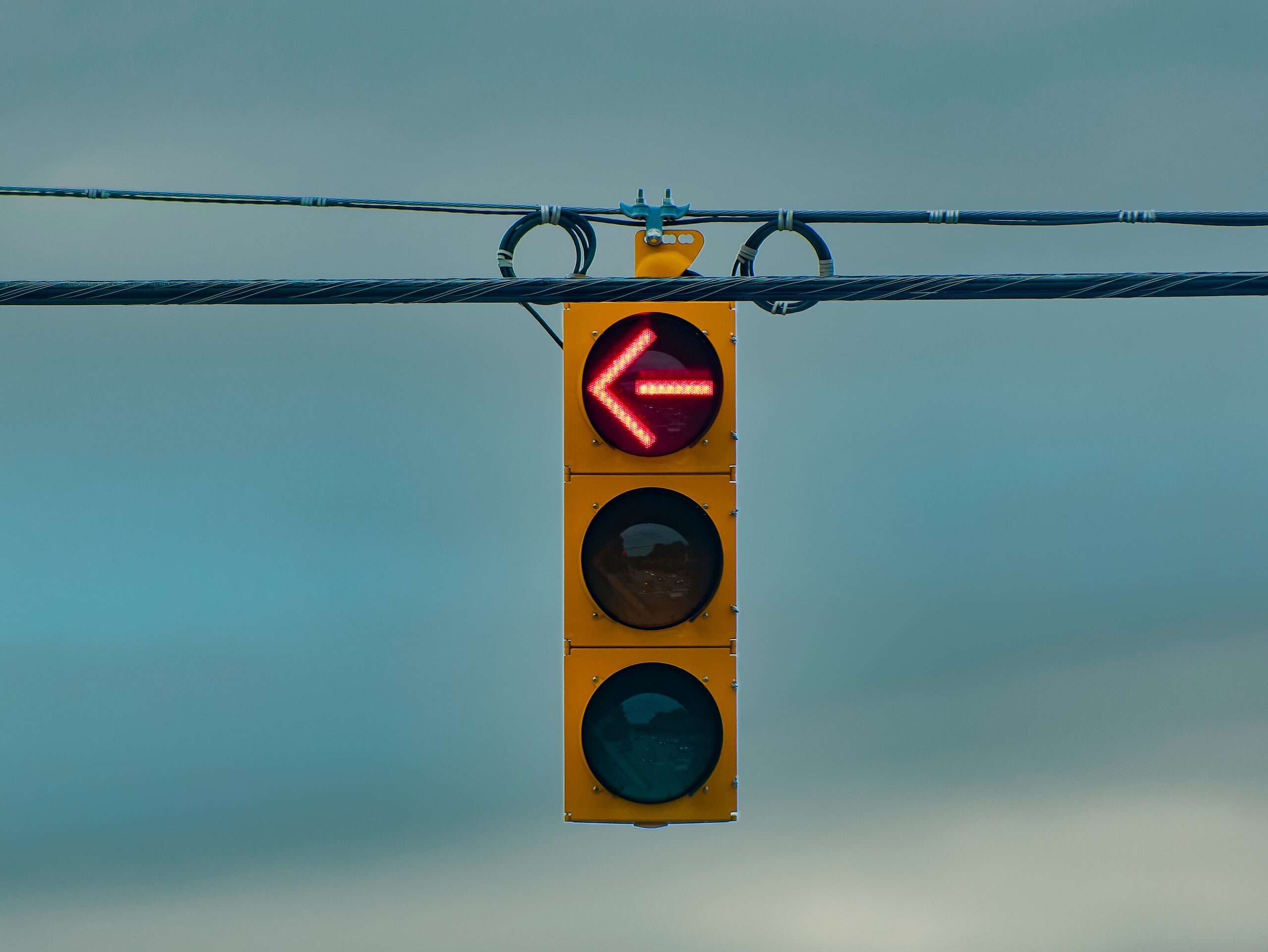
A protected green arrow usually gives the turning driver priority over opposing traffic facing a red signal. Fault can shift to an oncoming driver who enters against that red light.
Important evidence includes:
- The signal phase at the moment each driver entered
- Whether the arrow was green, yellow, or red
- The timing between signal changes
- The location of each vehicle when the light changed
- Whether either driver accelerated to beat the signal
Traffic camera footage and signal records can resolve disputes that driver statements cannot.
Left Turns on a Yellow Light
A yellow light does not automatically give the turning driver the right of way. The driver must still yield to oncoming traffic that presents an immediate hazard.
Some turning drivers enter the intersection on green, wait for traffic, and finish the turn as the signal changes. That fact alone does not establish negligence. The investigation must determine when the driver entered, what traffic remained, and whether the turn could be completed safely.
Turns Into Parking Lots and Driveways
A driver turning left into a store, apartment complex, gas station, or private driveway must yield to approaching traffic. These crashes often occur when a driver crosses several lanes and fails to see a vehicle in the far lane.
Visibility can be blocked by:
- Stopped traffic
- Larger vehicles
- Landscaping
- Signs
- Parked vehicles
- Road curvature
- Nighttime lighting
A driver cannot safely rely on another motorist waving them through. The turning driver must confirm that every crossed lane is clear.
Drivers Leaving Private Property
A driver leaving a driveway, parking lot, alley, or private road must yield before entering the highway. That duty applies whether the driver turns left or right.
A left turn from private property can require the driver to cross several lanes before reaching the intended direction of travel. Video and scene measurements can show how long the vehicle blocked the roadway.
U-Turn and Multi-Lane Collisions
A U-turn creates a longer movement across traffic and can lead to disputes about whether the maneuver was legal or safe. The driver must account for approaching traffic, roadway markings, visibility, and posted restrictions.
Multi-lane roads add another problem. One oncoming lane may stop while a vehicle in the next lane continues. The turning driver remains responsible for confirming that every lane is clear.
What Evidence Proves Left-Turn Accident Fault?
The strongest evidence shows where each vehicle was, which signal applied, and how much time each driver had to react. The point of impact helps, but it does not tell the complete story.
| Evidence | What It Can Establish |
| Intersection or business video | Signal color, lane position, vehicle movement, and impact sequence |
| Signal timing records | The order and length of green, yellow, arrow, and red phases |
| Event data recorder information | Speed, braking, throttle position, and changes in velocity |
| Phone records | Calls, messages, app activity, navigation use, and possible distraction |
| Vehicle damage | Angle of impact, direction of travel, and whether several impacts occurred |
| Witness statements | Signal observations, speed, driver behavior, and post-crash statements |
| Scene evidence | Skid marks, debris, sight obstructions, lane markings, and road geometry |
Video Can Settle the Right-of-Way Dispute
Video can show when the turning vehicle entered the intersection, whether the oncoming driver had a green light, and how long each vehicle remained visible.
Potential sources include:
- Traffic cameras
- Nearby businesses
- Homes and doorbell cameras
- Parking facilities
- Dashcams
- Buses
- Rideshare vehicles
- Delivery vehicles
Many systems overwrite recordings quickly. We identify potential cameras and demand preservation before the footage disappears.
Vehicle Data Can Expose Speed and Late Braking
Modern vehicles can store information from the seconds surrounding a collision. Depending on the system, that data can show speed, braking, throttle use, steering input, and impact force.
Data can prove that an oncoming driver was speeding or never applied the brakes. It can also show that the turning driver accelerated suddenly into the vehicle’s path.
Witnesses Can Confirm What the Drivers Missed
Independent witnesses may have seen the signal, the beginning of the turn, or one driver looking away from the road.
Their statements matter most when obtained early. Memories change, contact information becomes outdated, and people who witnessed the crash may become difficult to locate.
Can Both Drivers Be at Fault for a Left-Turn Crash?
Yes. Texas can divide responsibility between the turning driver, the oncoming driver, and any other person whose conduct contributed to the collision.
Texas Uses Proportionate Responsibility
Under Texas Civil Practice and Remedies Code Chapter 33, an injured person can recover compensation when their percentage of responsibility is 50 percent or less. The recovery is reduced by that percentage. A person found more than 50 percent responsible cannot recover.
For example, a person with $200,000 in proven damages who receives 25 percent of the fault can recover $150,000.
Insurers Use Shared Fault to Reduce Payment
The turning driver’s insurer may argue that the oncoming motorist:
- Was speeding
- Entered on a red light
- Failed to brake
- Changed lanes unexpectedly
- Drove without headlights
- Used a phone
- Could have avoided the impact
These are not established facts simply because an adjuster repeats them. We test each claim against vehicle data, video, signal records, sight lines, and physical evidence.
What Compensation Is Available After a Left-Turn Accident?
A Texas left-turn accident claim can include financial losses and the personal effect of the injuries. The value depends on the evidence, available coverage, future needs, and assigned fault.
Medical and Income Losses
Compensation can include:
- Emergency and hospital bills
- Surgery and rehabilitation
- Future medical care
- Lost wages
- Reduced earning ability
- Medical equipment
- Vehicle repair or replacement
- Towing, rental, and transportation expenses
A serious claim must address future consequences, not only bills already received.
Pain and Life Changes
Texas law can allow compensation for physical pain, mental anguish, impairment, and disfigurement. These losses require evidence showing how the collision changed work, mobility, independence, and daily responsibilities.
A fatal collision can also create separate wrongful death and survival claims.
What Should You Protect in the Days and Weeks After the Crash?
The days and weeks after a left-turn accident should focus on preserving evidence and documenting the full loss. Insurance companies use missing records to challenge both liability and damages.
Keep Important Records Together
Consider preserving:
- Medical bills and appointment records
- Wage and missed-work documents
- Vehicle photographs and repair estimates
- Dashcam or phone video
- Witness contact information
- Insurance letters and emails
- Towing and rental receipts
- Notes about work and activities the injuries prevent
Protect the Vehicle and Electronic Evidence
A totaled vehicle can be sold for salvage before its event data or lighting systems are inspected. Video can disappear even faster.
We move quickly when the vehicle, intersection, or electronic records can resolve a fault dispute.
Be Careful With Recorded Statements
An adjuster may ask for exact estimates of speed, distance, signal color, and reaction time before all evidence is available.
Cowen | Rodriguez | Peacock handles insurance communications for our clients. We provide required information without allowing a rushed interview to define the case.
How Long Do You Have to File a Texas Left-Turn Accident Lawsuit?
Texas generally gives an injured person two years to file a personal injury lawsuit. Exceptions and shorter notice requirements can apply, especially when a government vehicle or public entity is involved.
The Legal Deadline Is Usually Two Years
Texas Civil Practice and Remedies Code Section 16.003 generally requires personal injury lawsuits to be filed within two years after the claim accrues. (Texas Statutes)
The Evidence Deadline Arrives Much Earlier
The filing period does not preserve:
- Surveillance footage
- Signal data
- Vehicle event information
- Phone records
- Witness memories
- Damaged vehicles
- Rideshare or delivery records
A timely lawsuit cannot recreate evidence that disappeared during the first weeks.
Texas Left-Turn Accident Questions Answered by Our Attorneys
Is the Left-Turning Driver Automatically at Fault?
No. The turning driver usually has the duty to yield, but an oncoming driver can share or bear fault for speeding, running a red light, distraction, or another unsafe act.
Who Is at Fault When Someone Turns Left on a Green Arrow?
The oncoming driver can be at fault if they entered against a red light while the turning driver had a protected arrow. Video, signal timing, and witness accounts must confirm which signal each driver faced.
Can a Passenger Recover Compensation?
Yes. A passenger can pursue any driver, company, or other party whose negligence caused the collision. The passenger does not have to wait for the drivers to agree about fault.
Does a Traffic Ticket Decide Liability?
No. A citation can support a claim, but it does not decide civil responsibility. Video, vehicle data, signal information, physical evidence, and witness testimony provide a more complete account.
What If the Driver Turned Left in Front of My Bicycle?
The turning driver must account for lawful bicycle traffic before crossing its path. Bicycle location, lane markings, visibility, video, and vehicle damage can establish whether the driver failed to yield.
When the Insurer Tries to Rewrite the Turn
A left-turn collision creates instant opportunities for blame-shifting. The insurer benefits when video disappears, vehicles are destroyed, and witnesses become harder to find.
Cowen | Rodriguez | Peacock secures the evidence, challenges unsupported fault claims, and prepares serious cases for trial from the start. Clients speak directly with a Texas car accident attorney and receive clear answers throughout the claim.
Call Cowen | Rodriguez | Peacock at (210) 941-1301 for a free consultation. We are available 24/7, and there is No Cost to You unless we win.