A distracted driving pedestrian accident may leave the injured person with a strong suspicion but little obvious proof. The driver who struck them may have been looking at a phone, adjusting the radio, or focused on something other than the road. Without clear evidence, many victims worry their case comes down to their word against the driver's denial.
Texas law requires drivers to maintain proper attention to the roadway. When a distracted driver strikes a pedestrian, evidence beyond eyewitness accounts may exist to reveal what the driver was doing in the moments before impact. Cell phone records, vehicle data, surveillance footage, and witness observations may all help establish that the driver failed to pay attention.
Call us at (210) 941-1306 for a free consultation or contact us below. No cost to you unless we win.
Key Takeaways for Distracted Driving Pedestrian Accidents
- Texas law generally prohibits texting while driving under Texas Transportation Code Section 545.4251, with limited statutory exceptions, and violations may support a negligence claim.
- Cell phone records may reveal whether a driver was actively using their device at the time of impact, though obtaining these records requires legal process.
- Vehicle event data recorders may capture speed, braking, and other information that indicates whether the driver reacted appropriately before the collision, though available data varies by vehicle.
- Drivers rarely admit distraction after a crash, making independent evidence critical to establishing fault.
- Early investigation matters because some electronic evidence may be overwritten or lost if not preserved promptly.
Why Distracted Driving Poses Special Dangers for Pedestrians
Pedestrians have no protection when a vehicle strikes them. Unlike occupants of other vehicles, pedestrians lack airbags, seat belts, or a metal frame to absorb impact. A distracted driver who fails to see a pedestrian until the last moment may cause catastrophic injuries. Pedestrians face particular vulnerability in these crashes because they depend entirely on drivers seeing and avoiding them.
The Split-Second Window That Disappears
A driver who looks away from the road for even a few seconds loses crucial reaction time. Pedestrians crossing streets in San Antonio, Houston, Dallas, and other Texas cities rely on drivers to see them in time. When distraction eliminates that window, collisions become unavoidable regardless of what the pedestrian does.
Why Pedestrians Bear the Physical Consequences
The physics of pedestrian collisions make distraction particularly deadly. A pedestrian struck by a 3,000-pound vehicle absorbs tremendous force with no protection. Injuries may include traumatic brain injuries, spinal cord damage, broken bones, and internal organ trauma.
These severe outcomes make establishing fault critical. When distraction caused the collision, the evidence supporting that conclusion directly affects the injured pedestrian's ability to pursue compensation.
Why Drivers Rarely Admit Distraction

After a pedestrian collision, drivers have strong incentives to deny any distraction. Admitting phone use or inattention creates liability exposure and may result in traffic citations. Many drivers claim they were watching the road even when evidence suggests otherwise.
This denial creates a challenge for injured pedestrians. The driver's statement to police often appears in the crash report, establishing an initial narrative that the pedestrian must overcome with contrary evidence.
The Gap Between Statements and Evidence
A driver's claim that they were paying attention faces scrutiny when physical and digital evidence tells a different story. Cell phone data showing active use at the time of impact contradicts a denial of distraction. Witness observations of the driver looking down challenge claims of attentiveness.
Investigations that gather this evidence transform cases from credibility contests into fact-based analyses. The goal is to identify objective information that reveals what actually happened.
How Police Reports Handle Distraction
Police officers investigating pedestrian crashes may or may not cite distracted driving. Officers rely on what they observe at the scene and what parties tell them. Unless the driver admits phone use or witnesses report it, the crash report may not mention distraction.
The absence of a distracted driving citation does not mean distraction did not occur. Civil investigations often uncover evidence that was not available to officers at the scene. Police reports provide starting points, not final conclusions about fault.
How Cell Phone Records Reveal Distraction
Cell phone records may contain information that shows whether a driver was using their device when the collision occurred. These records include call logs, text message timestamps, and data usage information. When analyzed against the time of impact, they may reveal active phone use.
Obtaining cell phone records requires legal process because carriers protect subscriber privacy. Pedestrian accident attorneys may issue subpoenas or litigation holds to preserve and obtain this information during a lawsuit.
What Phone Records May Show
Cell phone records vary in the detail they provide, depending on the carrier and type of records requested. Basic records show when calls were placed or received and when text messages were sent. More detailed records may show data usage timestamps, though the level of app-specific detail varies by provider and circumstances.
The following types of information may appear in cell phone records that are relevant to a distracted driving investigation:
- Call logs that show incoming and outgoing calls with start times and durations.
- Text message timestamps that indicate when messages were sent or received.
- Data usage records that may indicate when the phone was actively transmitting information.
- Cell tower connection data that may help establish the phone's location at specific times.
- Voicemail access times that show when the driver checked messages.
This information helps investigators determine whether the driver engaged with their phone during the critical moments before impact.
The Importance of Preserving Phone Data
Cell phone data faces preservation challenges. Carriers retain records for varying periods, and some data types disappear relatively quickly. Phones themselves may be reset, damaged, or replaced after an accident.
Early action to preserve phone evidence strengthens a distracted driving claim. Litigation holds and preservation letters notify carriers and parties to retain relevant data before it disappears through normal business practices.
Vehicle Data That Indicates Driver Behavior
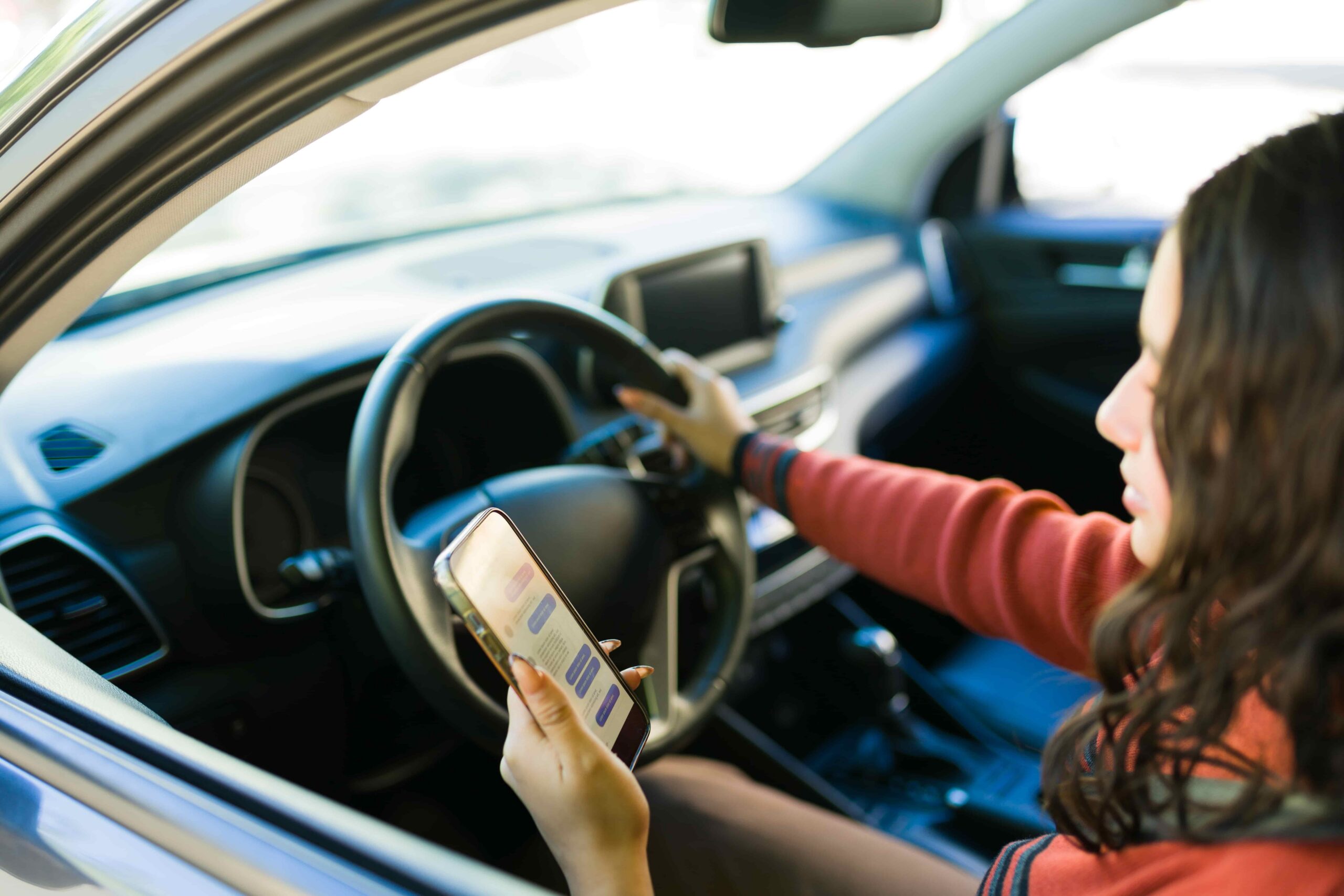
Modern vehicles contain electronic systems that record information about how the vehicle operated before a collision. Event data recorders, sometimes called vehicle black boxes, capture speed, braking, and other data. This information may reveal whether the driver reacted appropriately.
Vehicle data provides objective evidence of what the car was doing regardless of what the driver claims. A driver who says they were watching the road but whose vehicle shows no braking before impact faces difficult questions.
What Event Data Recorders May Capture
Event data recorders vary significantly by vehicle make, model, and year. Not every vehicle records every possible data point, and some older vehicles may have limited or no recording capability. When available, this data typically covers the seconds immediately before and during a collision, including:
- Vehicle speed at impact and in the seconds leading up to the collision.
- Brake application timing that shows when and whether the driver attempted to stop.
- Accelerator position in vehicles equipped to record this metric.
- Steering angle changes in vehicles with this recording capability.
- Seat belt status and airbag deployment timing.
This data helps reconstruct exactly what happened in the moments before the pedestrian was struck.
How Vehicle Data Connects to Distraction
Vehicle data does not directly show that a driver was looking at a phone. Instead, it reveals the consequences of inattention. A driver who was watching the road would typically brake or steer when a pedestrian appeared ahead. Absence of these reactions suggests the driver did not see the pedestrian in time.
When vehicle data shows no braking before impact despite sufficient visibility distance, investigators may conclude the driver was not watching the road. Combined with cell phone records showing active use, this evidence strengthens the argument supporting a distraction claim.
How Surveillance and Witness Evidence Helps
Beyond digital records, traditional evidence sources may also reveal driver distraction. Surveillance cameras, traffic cameras, and witness observations all contribute to the investigation. These sources may directly show what the driver was doing before the collision.
Texas cities increasingly have camera coverage at intersections, businesses, and residential areas. This footage may capture accidents and the moments leading up to them.
Surveillance Video From Nearby Sources
Businesses near accident scenes often have security cameras that capture parking lots, sidewalks, and adjacent roadways. Traffic cameras at intersections may record vehicles approaching crosswalks. Even doorbell cameras from nearby homes sometimes capture relevant footage.
This video evidence may show the driver looking down, holding a phone, or otherwise not watching the road. When available, video often provides the clearest evidence of distraction.
Witness Observations of Driver Behavior
Witnesses who observed the collision or the moments before it may provide valuable information. Passengers in other vehicles, pedestrians nearby, or workers at adjacent businesses sometimes notice a driver looking at their lap or holding a phone.
Witness testimony carries weight when it aligns with other evidence. A witness who reports seeing the driver looking down, combined with cell phone records showing active use, creates a consistent picture of distraction.
How Distraction Evidence Affects Fault Analysis
Texas applies negligence principles to pedestrian accident claims. Establishing that a driver was distracted directly supports the argument that the driver breached their duty of care. This breach forms a critical element of the negligence analysis.
Under Texas Civil Practice and Remedies Code Section 33.001, fault is allocated among all parties based on their respective responsibility. Evidence of distraction typically shifts significant fault to the driver.
Distraction as a Breach of Duty
Drivers owe a duty of reasonable care to pedestrians and others on the roadway. This duty includes paying attention to traffic conditions and watching for people who may enter the road. A driver who focuses on a phone instead of the road breaches this duty.
Evidence of distraction helps establish this breach with concrete facts rather than assumptions. Cell phone records, vehicle data, and witness accounts all support the conclusion that the driver failed to meet their legal obligation.
Why Evidence Strength Matters for Claim Evaluation
Stronger evidence of distraction may influence how fault is allocated and how the claim is evaluated. When clear evidence shows the driver was texting at the time of impact, the driver's share of responsibility typically increases. This allocation affects how insurers and juries assess the injured pedestrian's claim.
Evidence that strengthens your claim creates leverage in settlement negotiations and at trial. Insurance adjusters and juries both respond to concrete proof of distraction rather than speculation about what the driver might have been doing.
FAQs for Distracted Driving Pedestrian Accident Claims
Does Texas have specific penalties for texting while driving?
Texas generally prohibits texting while driving under Texas Transportation Code Section 545.4251, with limited exceptions such as emergencies and certain navigation uses. Violations constitute traffic offenses with fines. A citation for texting while driving may support a civil negligence claim by establishing the driver violated a safety statute.
What if the driver was using hands-free technology?
Hands-free phone use creates different questions than handheld use. Hands-free calls may still cause cognitive distraction even without manual distraction. Evidence showing hands-free use does not automatically eliminate a distraction claim, but it presents different investigative challenges than texting cases.
May social media activity be obtained as evidence?
Social media platforms retain data about when users access their accounts and engage with content. This information may be relevant if the driver was scrolling social media at the time of impact. Obtaining this data typically requires legal process directed at the platform, and the level of available detail varies.
What role do phone apps play in distraction cases?
Navigation apps, music apps, and other phone applications may distract drivers even without texting. Data usage records may indicate when apps were actively sending or receiving data. This information may support a distraction claim even when no text messages were exchanged, though detail levels vary by provider.
Does distraction always mean the driver is fully at fault?
Distraction does not automatically assign 100 percent fault to the driver. Texas comparative negligence principles still apply, and other factors may affect fault allocation. However, clear evidence of distraction typically places significant responsibility on the driver who failed to watch the road.
When Suspicion Meets Investigation
Many pedestrians who have been struck by vehicles know in their gut that the driver was not paying attention. The challenge lies in gathering evidence that supports what they already believe. Cell phone records, vehicle data, surveillance footage, and witness accounts may all reveal what the driver was doing when the collision occurred.
Cowen Law represents pedestrians throughout Texas who were injured by distracted drivers. Our attorneys know how to fight for fair compensation by investigating these claims thoroughly and identifying the evidence that matters most. Contact our team for a free consultation. We handle distracted driving pedestrian cases on a contingency fee basis, meaning our attorney fees depend on recovering compensation for your injuries.
Call us at (210) 941-1306 for a free consultation or contact us below. No cost to you unless we win.