The pedestrian darting out defense appears frequently in Texas accident claims when drivers argue that a pedestrian suddenly entered the roadway. This defense attempts to shift blame entirely onto the injured person, suggesting that the driver had no opportunity to stop or avoid the collision. Many injured pedestrians hear this accusation and assume their case is over before it begins.
Texas law does not treat pedestrian fault as an all-or-nothing question. A driver's claim that someone "came out of nowhere" faces scrutiny when investigators examine speed, visibility, reaction time, and the driver's attention level. The facts of how a collision actually occurred sometimes tell a different story than the initial accusation suggests.
Call us at (210) 941-1306 for a free consultation or contact us below. No cost to you unless we win.
Key Takeaways for the Pedestrian Darting Out Defense
- The darting out defense is an argument, not an automatic legal conclusion, and it must withstand analysis of physical evidence and witness accounts.
- Texas applies modified comparative negligence under Texas Civil Practice and Remedies Code Section 33.001, meaning injured pedestrians may recover compensation if their fault is 50 percent or less.
- Drivers have a continuing duty to exercise reasonable care, including maintaining a proper lookout and controlling speed under the circumstances.
- Speed, stopping distance, and perception-response time often reveal whether a driver truly lacked the ability to avoid a collision.
- Child pedestrian accidents receive particular scrutiny because Texas courts apply reasonableness standards that account for a child's age and maturity.
What the Darting Out Defense Actually Means
When a driver raises the darting out defense, they argue that the pedestrian moved into the roadway so suddenly that no reasonable driver could have avoided the collision. This defense frames the accident as entirely the pedestrian's fault because the driver supposedly had no chance to react.
The phrase "darting out" carries emotional weight. It paints a picture of reckless behavior by the pedestrian while portraying the driver as helpless. Insurance adjusters and defense attorneys use this language strategically because it shifts attention away from the driver's conduct before and during the collision.
Why Drivers and Insurers Commonly Use This Defense
The darting out defense appears so often because it establishes an initial narrative that favors the driver. When an insurance company receives a claim, the driver's statement becomes the first version of events on record. If that statement includes phrases like "ran right in front of me" or "came out of nowhere," the injured pedestrian must then present evidence that tells a different story.
This defense also appeals to common assumptions about pedestrian accidents. Many people instinctively believe that pedestrians bear responsibility when they are struck outside crosswalks or in unexpected locations. The defense exploits this bias even when the evidence points toward driver negligence.
How This Defense Affects Injured Pedestrians Emotionally
Injured pedestrians who hear the darting out accusation may feel blamed and ashamed. They may question their own memory of events or assume that the driver's account automatically defeats their claim. This emotional response sometimes leads people to abandon valid claims without exploring the actual evidence.
The accusation stings particularly hard for parents of children who were struck by vehicles. No parent wants to believe their child acted carelessly, yet the defense implies exactly that. These families benefit from knowing that the accusation alone does not determine fault.
Why This Defense May Weakens Under Scrutiny

The darting out defense relies heavily on the driver's self-serving account of what happened. When investigators examine the physical evidence, the defense frequently loses strength. Drivers who claim they had no time to react may have been driving too fast or failed to watch the road ahead.
Texas courts recognize that drivers owe a continuing duty of reasonable care to others on or near the roadway. This duty does not disappear simply because a pedestrian entered unexpectedly. The question becomes whether the driver operated their vehicle in a manner that allowed reasonable reaction time.
The Physics of Speed and Stopping Distance
Speed dramatically affects a driver's ability to stop. When investigators reconstruct an accident, they calculate whether a driver traveling at an appropriate speed would have had sufficient distance to stop. If the math shows the driver could have stopped at a lower speed, the darting out defense weakens significantly.
Perception-Response Time Analysis
Human reaction time also plays a critical role in these cases. Accident reconstruction experts analyze whether the driver's claimed reaction time matches the physical evidence. Skid marks, vehicle damage patterns, and final rest positions all provide data points. When the evidence contradicts the driver's story, the defense loses credibility.
How Texas Law Evaluates Pedestrian Fault
Texas does not use an all-or-nothing approach to fault in pedestrian accidents. Under Texas Civil Practice and Remedies Code Section 33.001, the state's modified comparative negligence system assigns percentages of responsibility to each party involved. An injured person may recover damages if their percentage of fault is 50 percent or less, with the recovery amount reduced by their assigned fault percentage.
The Driver's Duty to Maintain a Proper Lookout
Texas law requires drivers to exercise reasonable care, which includes keeping a proper lookout for pedestrians and other hazards. Texas Transportation Code Section 545.351 addresses speed requirements, stating that drivers must operate at a speed that is reasonable and prudent under existing conditions. A driver who failed to scan the roadway ahead may bear significant fault even if the pedestrian entered suddenly.
Courts examine whether the driver watched the road, checked sidewalks and curbs in pedestrian-heavy areas, and adjusted speed for visibility conditions. A driver who was focused on a phone or traveling too fast for a residential neighborhood may have contributed to the collision regardless of when the pedestrian entered the street.
Why Fault Is Not Automatically All-or-Nothing
Pedestrian accident investigations frequently reveal shared responsibility. The pedestrian may have entered the roadway without checking for traffic while the driver simultaneously traveled above the speed limit. Both actions contributed to the collision. Texas law accounts for this reality by allowing proportional fault allocation.
The darting out defense may be an attempt to assign 100 percent fault to the pedestrian. However, this outcome is not automatic and depends entirely on the evidence. Even modest speeding or momentary inattention may shift meaningful fault back to the driver.
Evidence That Challenges the Darting Out Defense
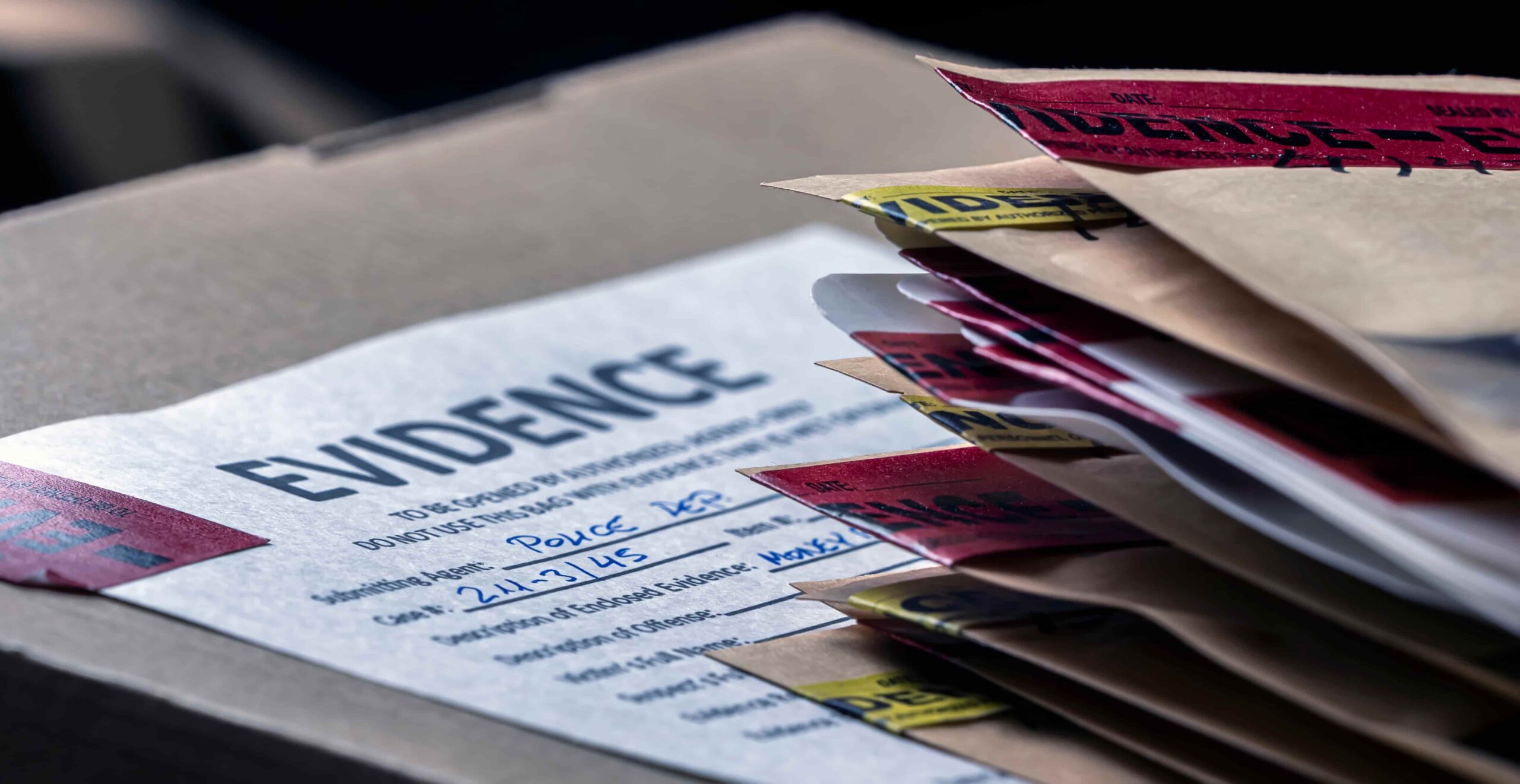
Physical evidence and witness accounts may contradict a driver's claim that they had no chance to avoid a collision. Attorneys who handle pedestrian cases know where to look for information that exposes weaknesses in this defense.
The following types of evidence may be used to challenge darting out claims.
- Vehicle speed data from the car's event data recorder or electronic control module, which may show the actual speed at impact.
- Skid mark analysis that reveals when the driver began braking and whether that timing matches the claimed reaction.
- Surveillance video from nearby businesses, traffic cameras, or doorbell cameras that captured the collision.
- Witness testimony from people who observed the driver's speed, attention level, or the pedestrian's actual movement.
- Road and lighting conditions that affected visibility and whether the driver adjusted accordingly.
This evidence transforms the case from a he-said-she-said dispute into a fact-based analysis. When the physical evidence contradicts the driver's account, the defense may lose much of its persuasive power.
How Visibility and Lighting Conditions Matter
Drivers must adjust their speed and attention based on what they reasonably should see. A pedestrian near a crosswalk, bus stop, or school zone creates a foreseeable situation. Drivers who fail to slow down in these areas may bear fault even when a pedestrian enters unexpectedly.
Nighttime collisions raise particular questions about headlight use, streetlight conditions, and whether the driver watched for pedestrians in areas where they commonly appear. A driver who claims they "didn't see" the pedestrian may actually be admitting they failed to maintain a proper lookout.
Child Pedestrian Accidents and the Darting Out Defense
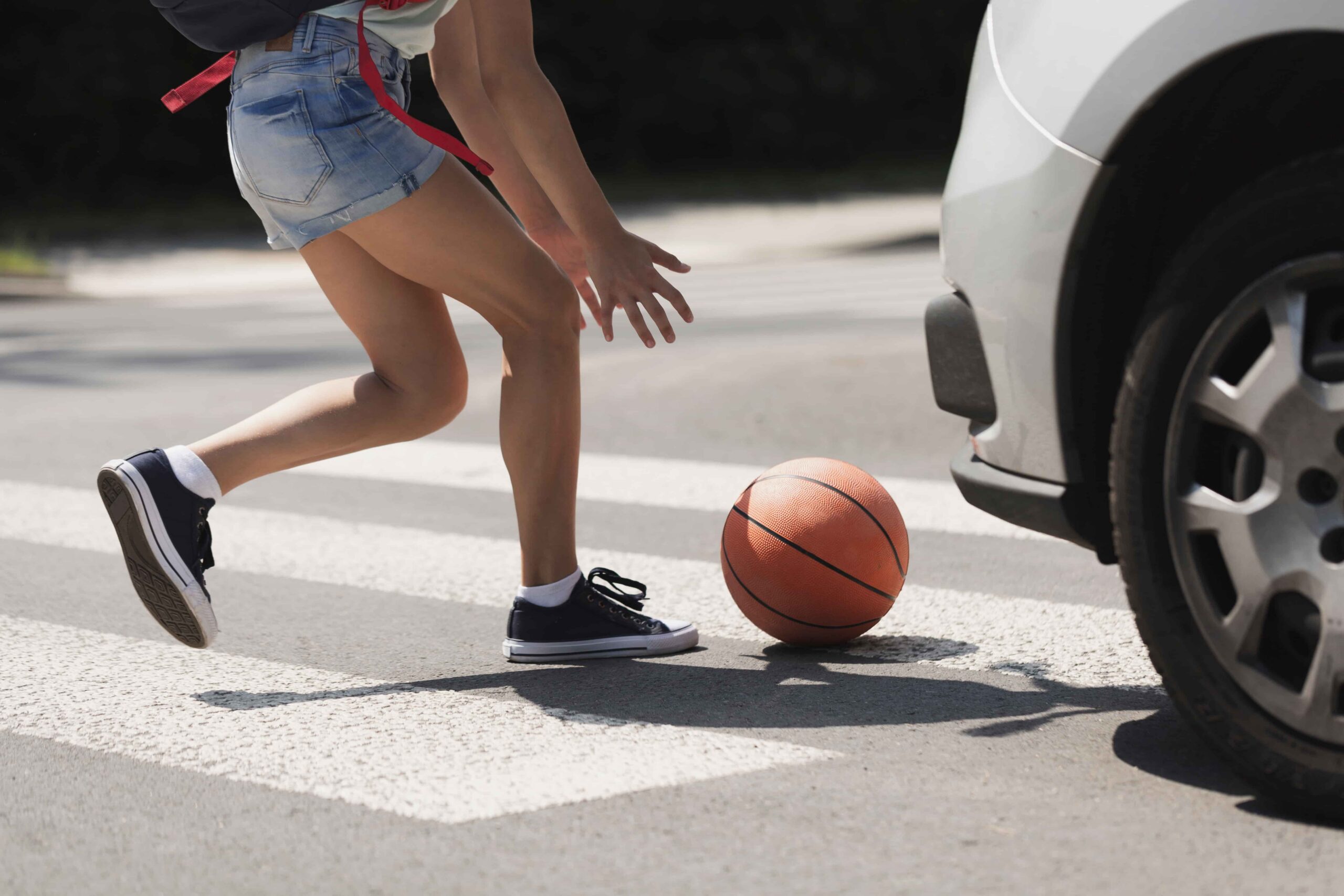
Children move unpredictably near roadways. Texas courts apply a reasonableness standard that accounts for a child's age and maturity when evaluating fault. Drivers must exercise heightened caution around schools, parks, and residential neighborhoods where children play. The darting out defense carries less weight when the injured pedestrian is a child.
Courts consider whether a reasonable driver would have anticipated the possibility of children entering the roadway. Factors that increase this expectation include the following situations.
- The collision occurred near a school during arrival or dismissal times.
- The area had visible playground equipment, basketball hoops, or other signs of children.
- Other children were visible nearby when the collision occurred.
- The neighborhood was residential with low speed limits designed to protect families.
- Ice cream trucks, school buses, or other child-attracting vehicles were present.
These factors shift responsibility toward the driver because a reasonable person would have driven more cautiously under the circumstances.
Why Children Receive Different Consideration
Texas courts recognize that children lack the judgment and experience to navigate traffic safely. A seven-year-old chasing a ball into the street is not able to exercise the same decision-making as an adult. The reasonableness standard that is applied to children reflects their developmental limitations.
Drivers who travel through areas where children are likely present must account for this reality. The darting out defense becomes much harder to sustain when the driver knew or reasonably should have known that children might enter the roadway.
FAQs for Pedestrian Darting Out Defense Claims
Does the darting out defense apply differently at crosswalks?
Location affects how courts evaluate fault. Pedestrians who are lawfully within crosswalks hold stronger legal positions than those who are crossing mid-block. However, even mid-block pedestrians may pursue claims if the driver's negligence contributed to the collision. The defense does not automatically succeed based on location alone.
What if there were no witnesses to the pedestrian accident?
Many pedestrian accidents lack independent witnesses, leaving the driver's account initially uncontested. Physical evidence often fills this gap. Vehicle damage, road markings, and electronic data may reveal information that contradicts the driver's version of events.
How does vehicle damage help challenge this defense?
Damage patterns tell investigators where and how a collision occurred. Front-center damage suggests the pedestrian was directly ahead, giving the driver maximum visibility. Damage to the vehicle's side may indicate the pedestrian was further into the crossing when struck. These details matter when evaluating whether the driver had time to react.
Do dashcam or traffic camera recordings override driver statements?
Video evidence carries significant weight because it shows what actually happened rather than what someone claims happened. When video contradicts a driver's darting out claim, the defense typically loses credibility. Attorneys often subpoena footage from nearby businesses, traffic systems, and even neighboring homes with security cameras.
What role does the posted speed limit play in these cases?
The speed limit sets a maximum legal speed but does not guarantee that speed is safe under all conditions. A driver traveling at the posted limit through a school zone at dismissal time may still bear fault for failing to account for predictable child pedestrian activity. Courts examine whether the speed was reasonable, not just legal.
Does a driver's claim of sun glare support the darting out defense?
Sun glare does not excuse a driver from the duty to exercise reasonable care. Drivers who face visibility challenges must slow down, use sun visors, or pull over if conditions prevent safe operation. A driver who continued at full speed despite impaired visibility may bear fault for failing to adjust to conditions they knew existed.
When the Blame Game Meets the Evidence
The darting out defense sounds convincing in the moments after a collision, but it faces a higher burden once the evidence undergoes analysis. Drivers who raise this defense must reconcile their account with speed calculations, reaction time physics, and witness observations. When those elements do not align, the defense loses its power.
Cowen Law represents injured pedestrians throughout Texas, including those who face blame from drivers and insurance companies. Our attorneys know how to fight for fair compensation by examining the evidence that matters most. Contact our team for a free consultation. We handle pedestrian accident cases on a contingency fee basis, meaning our pedestrian accident attorneys fees depend on recovering compensation for your injuries.
Call us at (210) 941-1306 for a free consultation or contact us below. No cost to you unless we win.