An experienced rideshare accidents lawyer can prove a driver was distracted by looking at digital records. They can get data from the apps, cell phone history, and company logs to show exactly what the driver was doing right when the crash happened.
A distracted rideshare driver is more dangerous than an average distracted driver. When an Uber or Lyft driver hits someone, they aren't usually just glancing at a personal text. They are juggling multiple tasks to make more money.
These drivers are often following a GPS, managing their current ride, and watching for notifications about their next pickup. Some even switch between different apps like Uber, Lyft, DoorDash, and Uber Eats all at once. Lawyers look for these specific patterns to prove who is at fault, even though the technology can be confusing for courts to handle.
Call us at (210) 941-1306 for a free consultation or contact us below. No cost to you unless we win.
Main Facts About Distracted Rideshare Driving
- Texas bans texting but allows hands-free and GPS use.
- Companies argue their apps count as "navigation" to avoid blame.
- Drivers often use many apps at once to earn more.
- Digital records from phones and apps can prove the driver was distracted.
- The main Texas law for this is Transp. Code § 545.4251.
- You usually have two years to file a legal claim in Texas.
Can Rideshare Drivers Text While Driving?
Texas law (Transportation Code Section 545.4251) allows drivers to use hands-free devices or navigation apps. Rideshare companies often argue that their drivers are just following the rules for navigation when they use their apps.
What Does Texas Law Say About Distracted Driving?
In 2017, Texas started a statewide ban on texting while driving. This law, Texas Transportation Code Section 545.4251, says drivers cannot read, write, or send electronic messages on a phone while the car is moving.
What the Law Forbids
According to the law, it is illegal to use a wireless device for messaging while driving unless the car is completely stopped. Even if a driver isn't given a ticket by the police, their distraction can still be used as evidence in a lawsuit to show they were being careless.
Exceptions to the Law
The law lists a few times when using a device is allowed:
- Hands-free use: This includes voice commands and Bluetooth.
- GPS or navigation: Using a map app to find your way is allowed.
- Emergencies: Reporting an accident or calling for help.
- Work dispatching: This is mainly for professional drivers talking to their company.
- Music: Controlling music while driving.
Texas adopted a statewide texting ban in 2017 under Texas Transportation Code Section 545.4251. This law prohibits any driver from reading, writing, or sending an electronic message on a portable wireless device while the vehicle is moving.
Why Rideshare Distraction Is Unique
Under Section 545.4251(b), an operator commits an offense if the operator uses a phone or other portable, wireless device to read, write, or send an electronic message while operating a motor vehicle unless the vehicle is stopped.
Rideshare drivers are distracted in a way that most drivers are not. The apps they use are built to keep them looking at the screen constantly. For these drivers, the phone isn't just a gadget—it's where they do all their work.
Forced to Multi-Task
A typical rideshare driver might be using:
- The app for their current passenger.
- A second app (like Lyft) while they are already driving for Uber.
- Delivery apps like DoorDash between rides.
- GPS software for directions.
- Messaging apps to talk to passengers or restaurants.
Pressure Riders Face from the Platforms
Rideshare companies want drivers to interact with the screen constantly. If a driver ignores too many notifications, they might lose out on better jobs or bonuses. This means the companies actually encourage drivers to look at their phones, even though it's dangerous.
Proving the Case in Court
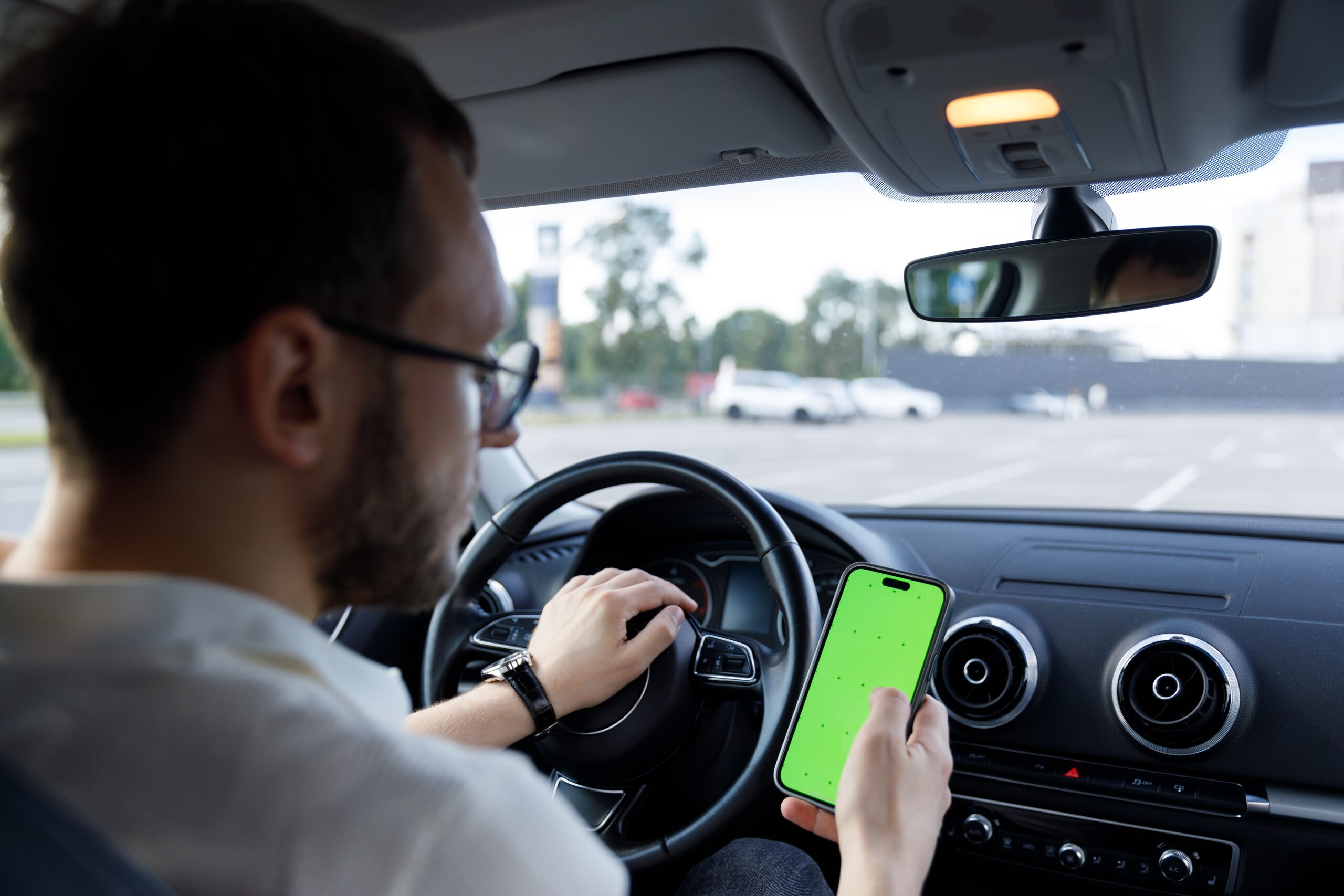
Since rideshare drivers use so many apps, we can find proof of distraction that isn't available in other cases. We can see every time they tapped the screen or received a notification. This data helps a jury understand exactly how the distraction led to the crash.
How Rideshare Companies Defend Themselves
Uber and Lyft have powerful lawyers who use a few common strategies to avoid paying for accidents.
The "Not My Employee" Defense
The companies often argue that drivers are "independent contractors," not employees. They say this means the company isn't responsible for the driver's mistakes. However, Texas lawyers have successfully challenged this by showing the company didn't do enough to ensure safety.
The Navigation Loophole
Companies also claim their drivers are just using the app for directions, which the law allows. But lawyers can argue that sending a message or accepting a new job isn't the same as looking at a map.
Blaming Only the Driver
Sometimes the company tries to put 100% of the blame on the driver personally. This is often to protect the company's money, but usually, the company's large insurance policy still has to cover the costs under Texas law.
Evidence Needed to Win
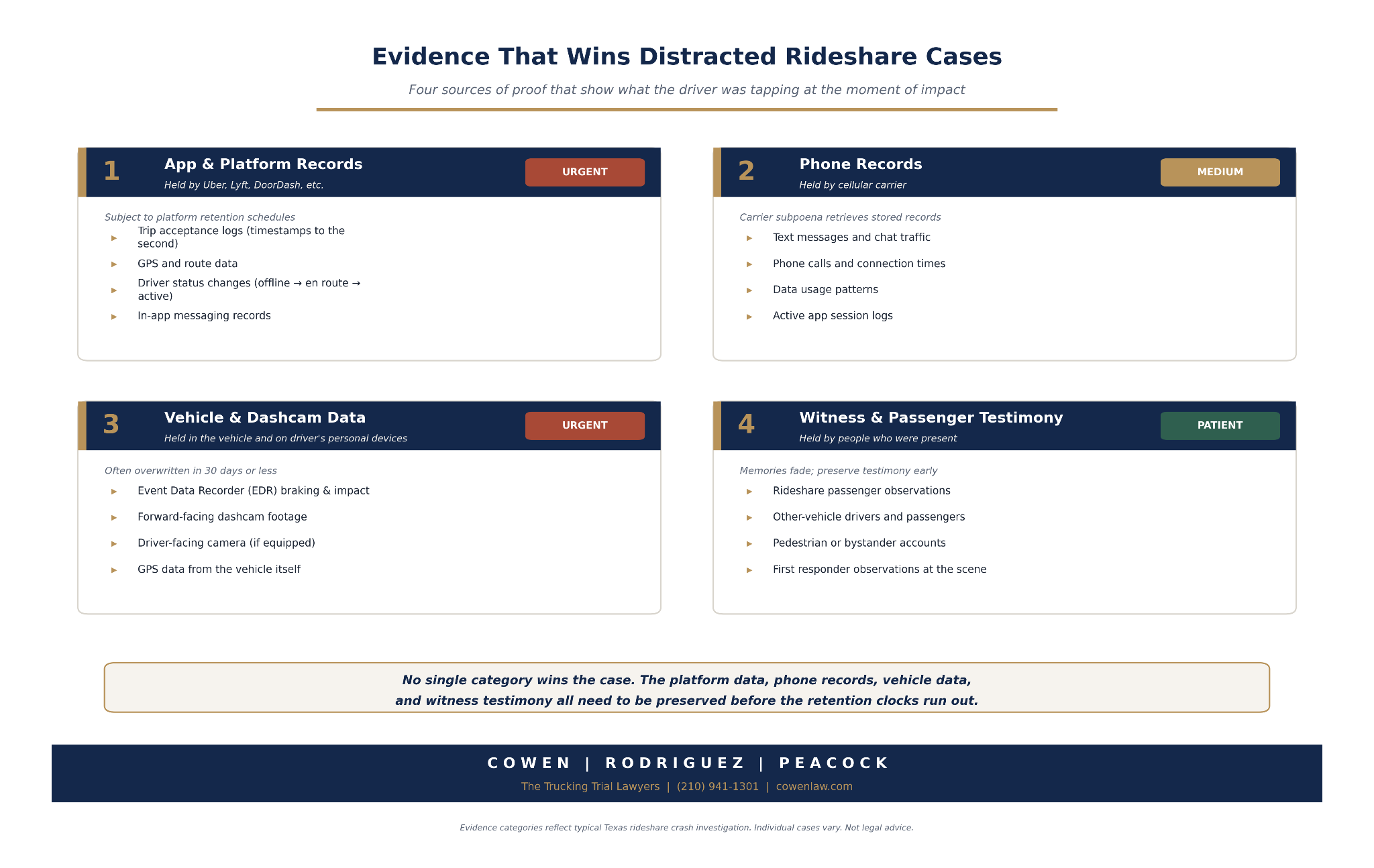
Winning these cases depends on getting digital data quickly before it is deleted.
Records from the App
The best proof comes from the companies themselves, including:
- Acceptance logs: Exactly when the driver was looking at or accepting new rides.
- GPS data: The car’s speed and location at every second.
- Status changes: When the driver was "on the clock" or searching for a passenger.
- In-app messages: Conversations between the driver and riders.
Because companies delete this data frequently, a lawyer must act fast to make sure it is saved.
Phone and Car Records
Phone company records show exactly when texts were sent or calls were made. Many cars also have "black boxes" that record braking and steering during a crash. Dashcams can also provide video proof of what happened.
Witness Testimony
Passengers often see exactly what the driver was doing before the crash. Their stories can be very helpful when combined with the digital data.
Compensation in Rideshare Cases
If you are hurt by a distracted rideshare driver, you can ask for money to cover your losses. Because these companies have large insurance policies, there is often more money available than in a normal car accident.
Financial Losses (Economic Damages)
- Medical bills from the past and future.
- Lost pay from missing work.
- Repairs for your car.
Physical and Emotional Harm (Noneconomic Damages)
- Pain and suffering.
- Emotional distress.
- Permanent physical changes or disabilities.
Extra Punishment (Exemplary Damages)
Under Texas law, if a driver was extremely careless, called "gross negligence", the court might order them to pay extra money as a punishment. Using multiple apps while speeding is a good example of this.
Deadlines to File Your Claim
In most cases, you have two years from the date of the crash to file a lawsuit under Texas law. There are different rules if a person died or if the victim was a child, but it is always best to act as soon as possible.
FAQs About Rideshare Accidents
Is it legal for them to use the app while driving?
Texas law bans messaging while driving, but there are exceptions for GPS. Whether using a rideshare app is legal depends on exactly what the driver was doing—like looking at a map versus typing a message.
What if they were using two apps at once?
Using two apps at once is strong proof of distraction. We can get records from both apps to show the driver was juggling tasks right before the accident.
How do I prove the driver was distracted?
We use app records, phone bills, car data, and witness stories. This data must be saved quickly before the companies delete it.
Can I sue Uber or Lyft directly?
Yes, you can often sue the company for not being careful about who they hire or how they supervise their drivers, even if they claim the driver is just a contractor.
What insurance covers the crash?
It depends on what the driver was doing. If they were on an active trip, a $1 million policy usually applies. If they were just logged in waiting for a rider, the coverage is lower.
What if it was a delivery app like DoorDash?
The same rules apply. These companies also have insurance, and drivers are just as distracted by delivery apps as they are by rideshare apps.
What does it cost to hire a lawyer?
At Cowen | Rodriguez | Peacock, we only get paid if we win your case. There are no upfront costs or hourly fees.
Rideshare work has made the line between driving and working on a phone very blurry. Companies set rules that force drivers to stay glued to their screens, and innocent people often pay the price when that distraction causes a crash. If you've been hurt, call us at (210) 941-1301 to protect your rights.
Call us at (210) 941-1306 for a free consultation or contact us below. No cost to you unless we win.