A truck blind spot accident often leaves injured drivers facing an unexpected defense: the truck driver claims they simply did not see the smaller vehicle. Semi-trucks have large areas around them where the driver's visibility is limited, commonly called "no-zones." On highways like I-10 and I-35 across Texas, these blind spots create daily hazards for motorists in San Antonio and throughout the state.
Being in a truck's blind spot does not automatically make you responsible for a crash. Professional truck drivers receive training on managing these visibility limitations. Federal and state regulations require them to take specific precautions before changing lanes or merging. When a truck driver fails to clear their blind spots properly and causes a collision, that driver and their company may bear liability regardless of where your vehicle was positioned.
Call us at (210) 941-1306 for a free consultation or contact us below. No cost to you unless we win.
Key Takeaways for Truck Blind Spot Accidents
- Semi-trucks have four primary blind spots: directly in front, directly behind, and along both sides of the trailer, with the right side creating the largest no-zone.
- Under Texas Transportation Code Section 545.060, drivers may not change lanes until they have determined the movement can be made safely, which applies to commercial truck drivers.
- The "blind spot defense" is a common tactic, but it does not excuse a truck driver's failure to properly check mirrors and clear lanes before maneuvering.
- Commercial drivers must comply with FMCSA safety regulations that require them to operate vehicles safely at all times, including during lane changes.
- Evidence such as dashcam footage, vehicle damage patterns, and electronic data may help establish that the truck driver failed to exercise proper care.
What Are Truck Blind Spots and No-Zones?
The term "no-zone" refers to areas around a semi-truck where the driver has limited or no visibility. These zones exist because of the truck's size, the height of the cab, and the length of the trailer. Every commercial truck has these blind spots, and every professional driver knows about them.
The Four Primary Blind Zones
A semi-truck's blind spots extend in four directions. The front no-zone stretches approximately 20 feet ahead of the cab, where the hood blocks the driver's view of low-profile vehicles. The rear no-zone extends roughly 30 feet behind the trailer, where no mirrors provide visibility.
The side no-zones create the most significant hazards during lane changes and merges. The left-side blind spot covers one lane and extends from the cab to about mid-trailer. The right-side blind spot is significantly larger than the left and typically extends across the adjacent lane and may partially affect a second lane, running along much of the trailer's length.
Why Blind Spots Create Elevated Risks
The size of these blind zones means a passenger car, motorcycle, or even a small SUV may travel alongside a truck without the driver seeing them in mirrors. This situation becomes dangerous when the truck driver decides to change lanes without properly verifying that the path is clear.
On Texas highways with heavy commercial traffic, these scenarios occur frequently. A truck driver who relies solely on a quick mirror glance may miss a vehicle positioned in one of these zones. The consequences may include sideswipe collisions, vehicles run off the road, and multi-vehicle crashes.
Why Blind Spots Do Not Excuse Truck Driver Negligence

Insurance companies and trucking defendants sometimes argue that the injured driver bears fault for being in a blind spot. This argument misunderstands both the law and the professional responsibilities of commercial drivers. Blind spots create a heightened duty of care, not immunity from liability.
Professional Training on No-Zone Management
Commercial truck drivers are trained on blind spot awareness as part of the Commercial Driver's License (CDL) process and through carrier safety programs. This training covers the location and size of each no-zone, techniques for checking blind spots before maneuvering, and the dangers of assuming lanes are clear without verification.
The following responsibilities apply to commercial truck drivers regarding blind spots:
- Checking all mirrors before initiating any lane change or merge
- Using proper signaling to alert other drivers of intended movements
- Allowing adequate time for vehicles to clear blind zones after signaling
- Adjusting speed to create safe gaps before changing lanes
- Recognizing that blind spots require extra caution, not less
These training requirements establish that truck drivers know about blind spot dangers and bear responsibility for managing them safely.
Legal Standards for Lane Changes in Texas
Texas law places clear duties on all drivers who change lanes. Under Texas Transportation Code Section 545.060, a vehicle may move from its lane only after the driver determines the movement can be made safely. This standard applies equally to passenger vehicles and commercial trucks.
For truck drivers, this means a lane change is not safe simply because the driver did not see another vehicle. If a vehicle occupied the lane the truck moved into, the truck driver failed to adequately verify safety before changing lanes. The blind spot explains why the driver may not have seen the vehicle, but it does not excuse the failure to properly check.
Is It Illegal to Be in a Truck's Blind Spot?
No Texas law prohibits driving in a truck's blind spot. While safety campaigns encourage motorists to avoid lingering beside semi-trucks, being in a no-zone does not violate any traffic regulation. The truck driver retains responsibility for operating their vehicle safely regardless of where other vehicles are positioned.
The Shared Road Reality
Texas highways require all vehicles to share space, including the space adjacent to commercial trucks. Passing a semi-truck on I-35 necessarily involves traveling through its blind zones. Merging onto a highway where trucks are present means temporarily occupying areas with limited visibility.
Drivers cannot realistically avoid all truck blind spots during normal highway travel. The law does not require them to do so. What the law does require is that truck drivers account for these known visibility limitations when operating their vehicles.
Comparative Fault Considerations
Texas follows a modified comparative fault system under Texas Civil Practice and Remedies Code Section 33.001. This means fault may be divided between parties based on their respective contributions to the crash. An injured driver may recover damages as long as they bear 50 percent or less of the responsibility.
In blind spot cases, trucking defendants sometimes argue the injured driver contributed to the crash by positioning their vehicle in a no-zone. However, merely being in a blind spot does not establish negligence by the smaller vehicle. The analysis focuses on whether either driver violated traffic laws or failed to exercise reasonable care.
Common Types of Blind Spot Crashes
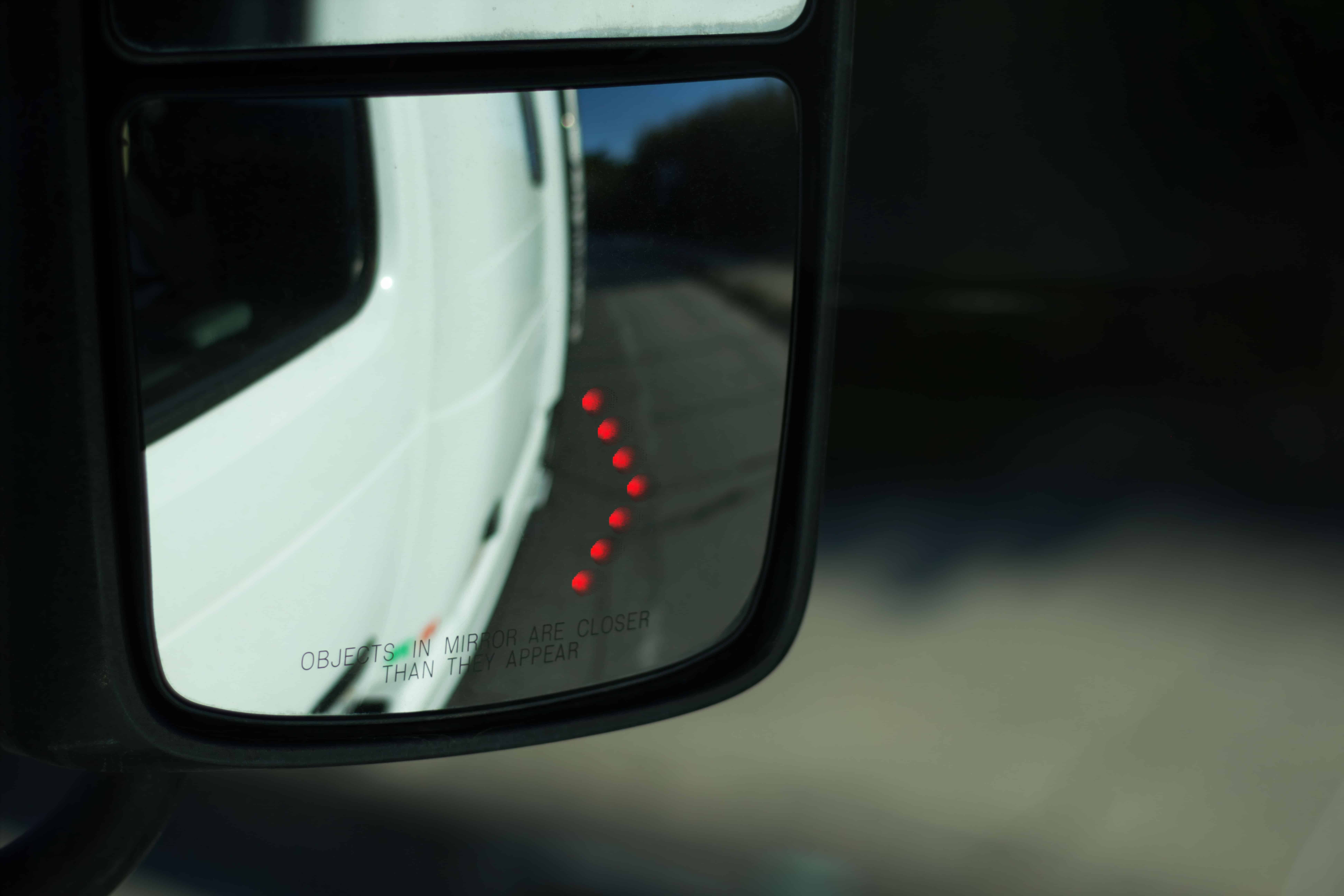
Truck blind spot accidents occur in several recognizable patterns. Each pattern involves the truck driver's failure to verify that the intended path of travel is clear before executing a maneuver.
Sideswipe Collisions During Lane Changes
The most common blind spot crash involves a truck changing lanes into a vehicle traveling alongside. The truck driver checks mirrors, sees no vehicle in the reflected view, and begins moving over. The smaller vehicle, positioned in the no-zone, has no time to react before the trailer makes contact.
These sideswipes often push smaller vehicles across lanes or off the roadway entirely. At highway speeds, even a glancing contact with a semi-trailer may cause the smaller vehicle to lose control. Secondary collisions with barriers, other vehicles, or obstacles frequently result.
Merge Accidents at Highway Entrances
Highway on-ramps create situations where trucks and passenger vehicles compete for the same space. A truck driver merging onto I-10 or entering a construction zone may fail to yield to vehicles already occupying the target lane. The merging truck's blind spots make this particularly dangerous when smaller vehicles are traveling alongside.
The following crash patterns commonly occur in truck blind spot accidents:
- Lane change sideswipes where the truck moves into an occupied lane
- Merge collisions at highway entrances or construction zones
- Right-turn squeeze accidents where trucks turn across vehicles in adjacent lanes
- Backing accidents in parking lots or loading areas where rear visibility is zero
- Drift accidents where fatigued drivers gradually move out of their lane
Each pattern involves predictable blind spot hazards that trained commercial drivers must manage.
Wide Turn Crashes
Semi-trucks require extra space to complete turns, particularly right turns. A truck driver may swing wide to the left before turning right, or may need the adjacent lane to complete the maneuver. Vehicles positioned on the truck's right side during these turns may be struck or squeezed against curbs.
These wide turn accidents often occur at intersections in urban areas. The truck driver may not see a vehicle that pulled up on the right side while the truck was waiting to turn. When the truck begins its turn, the smaller vehicle has nowhere to escape.
Evidence That Challenges the Blind Spot Defense
When a truck driver claims they did not see the other vehicle, investigation may reveal evidence that contradicts this defense or establishes that the driver failed to exercise proper care. Several sources of evidence become relevant in these cases.
Electronic Data from the Truck
Modern commercial trucks contain Electronic Control Modules (ECMs) that record vehicle operation data. This information may show the truck's speed, steering inputs, and brake application in the moments before a crash. The data may reveal sudden lane changes, steering inputs, or a lack of braking, which may indicate whether the driver maneuvered without allowing sufficient time to verify the lane was clear.
Some trucks, particularly newer models, may be equipped with lane departure warning systems or blind spot monitoring technology, though these systems are not federally required and are not present on all commercial vehicles. If these systems activated before the crash, they may indicate the truck was drifting or that the system detected a vehicle in the blind zone.
Dashcam and Surveillance Footage
Video evidence often provides the clearest picture of what happened during a blind spot crash. The truck's own dashcam, if equipped, may show the view ahead and the timing of any lane change. Nearby vehicles with dashcams, traffic cameras, and business surveillance systems may capture additional angles.
The following evidence types may strengthen claims in blind spot accident cases:
- Dashcam footage from the truck, the injured driver, or nearby vehicles
- Traffic camera recordings from highway or intersection monitoring systems
- Electronic Control Module data that shows the truck's movements before impact
- Vehicle damage patterns that indicate the angle and location of impact
- Witness statements from other motorists who observed the crash
Each piece of evidence helps reconstruct what the truck driver did and whether proper lane-clearing procedures were followed.
Damage Pattern Analysis
The location and nature of vehicle damage may reveal important details about a blind spot crash. Impact damage on the front portion of the smaller vehicle may suggest it was ahead of the truck's cab at the time of contact, particularly when supported by other physical and electronic evidence. Damage further back may indicate the truck overtook and struck the smaller vehicle.
Accident reconstruction professionals analyze these damage patterns along with road markings, debris fields, and final vehicle positions. Their analysis may establish the relative positions and movements of both vehicles, countering claims that the injured driver was entirely invisible to the truck driver.
How Trucking Companies May Share Liability

The truck driver is not always the only party who may bear responsibility for a blind spot accident. Trucking companies have obligations related to equipment, training, and driver supervision that may create additional sources of liability.
Mirror and Equipment Requirements
Federal regulations establish minimum mirror requirements for commercial vehicles. Trucks must have mirrors positioned to provide the driver with views of the highway and any vehicles approaching from the side. When mirrors are improperly adjusted, damaged, or fail to meet standards, the trucking company may bear responsibility.
Some carriers equip their trucks with blind spot cameras, convex mirrors, or electronic warning systems that reduce no-zone hazards. When a company fails to maintain properly functioning equipment, or when drivers fail to use available safety features, these failures may support liability claims.
Training and Supervision Failures
Trucking companies must provide adequate training to their drivers, including training on blind spot management. When a driver causes a crash because they failed to properly check blind spots, an investigation may reveal that the company's training program was inadequate or that the driver's performance history showed prior unsafe lane changes.
Companies that pressure drivers to meet tight delivery schedules may contribute to rushed lane changes that skip proper mirror checks. Evidence of such pressure may support claims that the company's practices contributed to the crash.
FAQ for Truck Blind Spot Accidents
What if the truck had blind spot warning systems but the driver ignored them?
If investigation reveals that the truck's safety systems activated before the crash, this evidence may support claims that the driver failed to respond appropriately to warnings. However, these systems are optional and not present on all trucks, so their availability depends on the specific vehicle involved.
Do trucks with cameras have smaller blind spots?
Camera systems may reduce blind spot hazards by providing drivers with additional views around the truck. However, cameras do not eliminate the driver's responsibility to verify safety before lane changes. A driver who has camera feeds available but fails to check them may actually face stronger liability arguments.
What happens if both the truck driver and passenger vehicle driver were changing lanes?
When both vehicles are maneuvering simultaneously, fault analysis becomes more complex. Investigation focuses on which driver initiated the lane change first, whether either driver signaled properly, and which driver had the legal right to occupy the contested lane. Comparative fault may apply based on each driver's actions.
Do different types of trailers create different blind spot risks?
Trailer type does affect blind spot size and location. Flatbed trailers may allow some visibility around the cargo, while enclosed trailers block all views. Tanker trucks and specialized equipment create unique blind spot patterns. Regardless of trailer type, the driver must account for visibility limitations.
What if the truck was speeding when it changed lanes into my vehicle?
Speed affects a driver's ability to verify lane safety and respond to hazards. A truck changing lanes at high speed has less time to check mirrors and may not allow adequate time for vehicles to clear the intended path. Evidence of speeding may strengthen claims that the truck driver failed to exercise proper care.
When a Truck Driver Says They Did Not See You
Being told that a crash was your fault because you were in a truck's blind spot may feel frustrating and unfair. The reality is that blind spots create responsibilities for truck drivers, not excuses. Professional drivers know where their no-zones are and must take appropriate steps to manage them safely.
Cowen Law represents families throughout San Antonio and across Texas in truck blind spot accident cases. Our attorneys understand the tactics that trucking companies use to shift blame to injured motorists, and we know how to gather evidence that challenges these defenses. We handle these cases on a contingency fee basis, which means families pay nothing unless we recover compensation on their behalf. If a truck driver claims they did not see you, a conversation with our team may help you understand your options and fight for fair compensation.
Call us at (210) 941-1306 for a free consultation or contact us below. No cost to you unless we win.