Texas changed the rules on the seat belt defense in 2015, and most injured Texans have never heard about it. For decades, Texas law actually prohibited defendants from telling juries that a plaintiff was not wearing a seat belt at the time of a crash. The reasoning was that fault belonged to the driver who caused the wreck, not to the victim's choice about restraint.
In Nabors Well Services, Ltd. v. Romero, the Texas Supreme Court reversed that long-standing rule. Defendants can now introduce seat belt non-use as evidence, and Texas juries can reduce a plaintiff's recovery based on that evidence under the state's comparative fault framework. A Texas car accident lawyer who handles cases involving unbelted plaintiffs treats the seat belt defense as a real but containable threat to the recovery.
The seat belt defense does not bar a case. It does not transfer fault from the at-fault driver to the injured person automatically. What it does is open a specific narrow argument: that some portion of the plaintiff's injuries would not have occurred, or would have been less severe, if the seat belt had been used.
The reduction applies only to that portion of the damages. The driver who caused the crash still bears the underlying responsibility, and most catastrophic cases retain most of their value even when the seat belt defense is raised.
The framework below explains when the defense applies, how Texas courts evaluate it, and what counters the strongest defense arguments.
What the Law Says
- Nabors Well Services v. Romero (2015) opened the seat belt defense in Texas.
- The defense reduces recovery only for injuries the belt would have prevented.
- Comparative fault rules apply; recovery is barred only above 50% plaintiff fault.
- Expert testimony is required to prove seat belt non-use changed the outcome.
- The defense does not transfer crash-causation fault from the at-fault driver.
- Two-year filing window applies under Texas law.
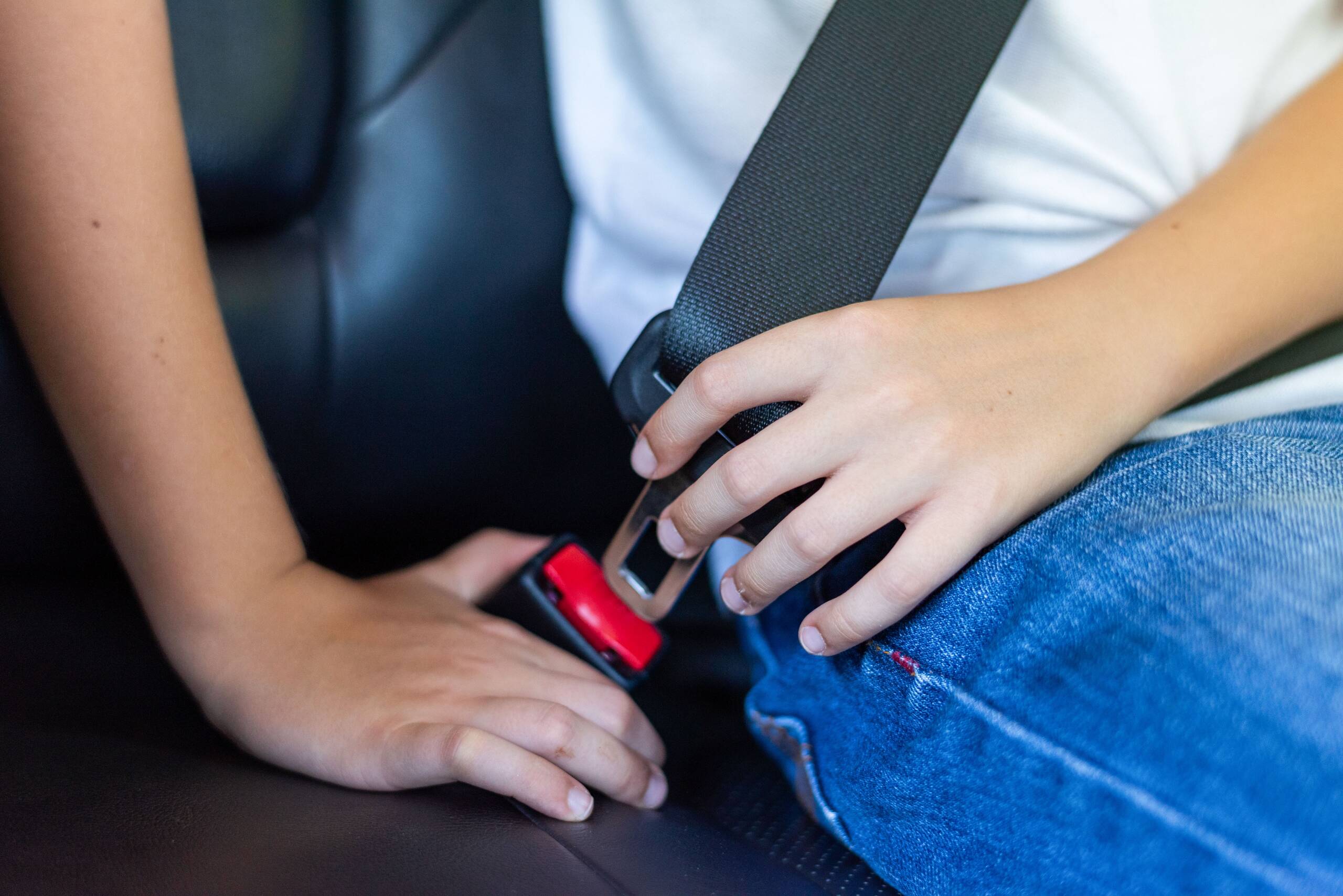
How the Texas Seat Belt Defense Works
| Element | What It Means |
|---|---|
| Trigger | Plaintiff was not wearing a seat belt at the time of the crash |
| Burden of proof | On the defendant raising the defense |
| Required evidence | Expert testimony on belt non-use and injury causation |
| Effect on recovery | Reduction proportional to comparative fault assigned |
| Limit on reduction | Applies only to injuries belt use would have prevented or lessened |
| Cap on plaintiff fault | Recovery barred entirely if plaintiff fault exceeds 50% |
Texas Seat Belt Law Before Nabors Well Services
For more than three decades, Texas law treated seat belt non-use as off-limits in personal injury litigation. The rule originated in older statutes and was reinforced by Texas Supreme Court decisions holding that the failure to wear a seat belt could not be used to reduce a plaintiff's recovery, even though the underlying statute required adult drivers and front-seat passengers to wear them.
The policy reasoning was straightforward. The Legislature did not want injured plaintiffs penalized for a passive choice when the active negligence that caused the crash belonged to someone else.
The driver who ran a red light, the trucking company that put a fatigued driver on the road, and the impaired motorist who crossed the center line all bore the legal responsibility for the crash. Whether the victim was belted or not was treated as a separate issue, not relevant to fault.
That framework lasted from the 1980s until 2015.
Can not wearing a seat belt reduce your injury compensation in Texas?
Yes. Since the Texas Supreme Court's 2015 decision in Nabors Well Services v. Romero, defendants can present evidence that a plaintiff was not wearing a seat belt to reduce the recovery under Texas comparative fault rules. The reduction applies only to injuries the seat belt would have prevented or lessened.
What Changed in Nabors Well Services v. Romero
In Nabors Well Services, Ltd. v. Romero, the Texas Supreme Court reversed the prior rule and held that seat belt non-use evidence is admissible in personal injury cases. The decision built on changes to Texas comparative fault law that occurred over the decades since the original prohibition was created, and it brought Texas in line with the majority of states that allow the seat belt defense.
What the Decision Held
The court ruled that defendants can introduce evidence that the plaintiff was not wearing a seat belt at the time of the crash for the limited purpose of showing that some portion of the injuries would not have occurred, or would have been less severe, if the seat belt had been used. The evidence becomes part of the comparative fault analysis underTexas Civil Practice and Remedies Code Chapter 33.
What the Decision Did Not Hold
The court did not hold that seat belt non-use creates strict liability or automatically reduces recovery. The defense still has to prove three things: that the plaintiff was not wearing a belt, that wearing one would have changed the outcome, and that the failure to wear one was negligent under the circumstances. Without those proofs, the defense fails.
When the Seat Belt Defense Applies
Not every Texas crash with an unbelted plaintiff produces a viable seat belt defense. The doctrine applies under specific conditions.
When Texas Law Required the Belt
Texas Transportation Code generally requires drivers and passengers age 17 and older to wear safety belts when riding in a vehicle equipped with them. Younger passengers must use age-appropriate restraints. When the law did not require a belt at the time and place of the crash, the defense usually does not apply.
When the Crash Type Implicates Belt Use
The defense applies most strongly to crashes where seat belts would clearly have changed the injury profile. Frontal collisions, side-impact crashes, rollovers, and ejection scenarios all involve well-established research on the effect of seat belts. Low-speed rear-end collisions and pedestrian or motorcycle crashes typically do not implicate seat belt use at all.
When the Defense Can Show Causation
The defense must present qualified testimony connecting seat belt non-use to specific injuries. Generic assertions that "seat belts save lives" are not enough. The testimony has to describe how the plaintiff's body moved during the crash, what the seat belt would have done differently, and which specific injuries would have been prevented or lessened.
How Damages Get Reduced Under the Defense
The reduction in damages follows the comparative fault framework, but with important limits.
The Reduction Applies Only to Belt-Related Injuries
The seat belt defense does not reduce the recovery for the entire case. It reduces recovery only for the injuries that wearing the belt would have prevented or lessened. A plaintiff who suffered both a leg fracture (unrelated to belt use) and a head injury (which a belt might have prevented or reduced) keeps the full leg fracture damages and may face reduction only on the head injury damages.
Comparative Fault Math
Under Texas modified comparative fault, the jury assigns a percentage of responsibility to each party. For belt-related injuries, the jury may assign some portion of fault to the plaintiff for failing to wear the belt. The award for those injuries is then reduced by that percentage.
If the jury finds the plaintiff 30 percent at fault for the belt-related injuries, those damages are reduced by 30 percent. Other damages remain at full value.
The 50 Percent Bar
If the total fault assigned to the plaintiff across all categories exceeds 50 percent, Texas comparative fault rules bar recovery entirely. In most seat belt defense cases, the plaintiff's share of fault stays well below 50 percent because the underlying crash was caused by someone else's negligence.
Call us at (210) 941-1306 for a free consultation or contact us below. No cost to you unless we win.
What the Defense Has to Prove
The seat belt defense is not automatic. The defendant carries the burden on every element.
Evidence of Non-Use
The defense must establish that the plaintiff was not wearing a belt. Common evidence includes:
- Statements from the plaintiff at the scene or in medical records
- Statements from witnesses
- Photographs showing the unbelted position of the plaintiff after the crash
- Vehicle data from event data recorders documenting belt status
When the evidence of non-use is contested, the defense often struggles to establish the foundation for the defense at all.
Expert Testimony on Causation
Texas courts require qualified testimony to connect belt non-use to specific injuries. The qualified witness must:
- Examine the crash dynamics including impact angle, speed, and forces involved
- Analyze the plaintiff's specific injury pattern
- Compare the actual injury pattern to what a belted occupant would have experienced
- Identify which injuries the belt would have prevented or lessened
Without this analysis, the defense lacks the foundation to argue belt non-use changed the outcome.
Evidence That the Plaintiff Was Negligent in Not Belting
The defense must also show that the failure to wear the belt was unreasonable under the circumstances. Most adult plaintiffs in vehicles equipped with belts will meet this standard, but specific circumstances can complicate the analysis.
A passenger in a vehicle with a defective belt, a person who had just unbuckled to reach for something, or a person in a seating position where belt use was impractical may all have defenses against the negligence prong.
Filing Deadlines and Procedural Rules
A Texas personal injury case involving a seat belt defense follows standard procedural deadlines.
- Two-year statute of limitations: Most claims must be filed within two years of the crash under Texas Civil Practice and Remedies Code § 16.003.
- Wrongful death: Filed under the Texas Wrongful Death Act with its own deadline running from the date of death.
- Governmental defendants: When a city, county, or state vehicle was involved, the Texas Tort Claims Act imposes notice requirements that often run within months of the crash.
- Minor plaintiffs: Tolling under § 16.001 may apply, but parental claims for medical expenses run on the standard clock.
FAQs About the Texas Seat Belt Defense
Will I lose my case if I was not wearing a seat belt?
No. The seat belt defense reduces recovery for injuries the belt would have prevented, but it does not bar the case. The driver who caused the crash still bears the underlying responsibility, and most cases retain most of their value even when the defense is raised.
Does the seat belt defense apply to every Texas car accident case?
No. The defense requires evidence that the plaintiff was unbelted, qualified testimony that belt use would have changed the injury outcome, and proof that the failure to wear a belt was unreasonable under the circumstances. Many cases lack one or more of these elements.
What if I was a passenger and not the driver?
The seat belt defense can apply to passengers. Texas law requires most adult and child passengers to wear belts when they are available. The same evidence requirements apply.
What if my injuries had happened anyway, with or without a belt?
This is one of the strongest counters to the defense. If qualified testimony shows the injuries would have occurred regardless of belt use, the defense fails on the causation element. The plaintiff's counsel often retains qualified witnesses to address this directly.
Can the seat belt defense be used in a commercial truck case?
Yes, the defense applies in any case where a passenger vehicle occupant was unbelted, including truck accident cases. The trucking company's underlying negligence usually dominates the analysis, and the defense rarely reduces the recovery substantially in catastrophic truck cases.
What the Defense Is Really Worth
The seat belt defense looks scarier on paper than it does in practice. Most cases involving an unbelted plaintiff retain the majority of their value because the underlying driver negligence drives the verdict, the reduction applies only to a narrow set of injuries, and the defense must prove every element with qualified testimony.
The cases where the defense substantially reduces recovery are the ones where the plaintiff's counsel did not challenge the defense properly. A case built around the at-fault driver's conduct, with careful rebuttal of the defense's causation analysis, often closes for what the case is genuinely worth, even when the unbelted issue is in play.
Cowen | Rodriguez | Peacock prepares every case for trial from day one, and the insurance companies and trucking carriers on the other side know it. From your first call, you speak directly with an attorney, not a case manager or paralegal.
Consultations are free, available 24/7. No fee applies unless we recover money for you. Call (210) 941-1301 to talk through what happened.