A rideshare accident vs. a car accident claim in Texas comparison reveals that while both involve vehicle collisions, the legal and insurance hurdles in a rideshare case are significantly more burdensome.
In a standard car accident, you typically deal with a single insurance company representing one driver. A rideshare claim involves a driver, a multi-billion dollar technology company, and a layered insurance structure that changes based on the driver's activity in the app.
Cowen Law Car & Truck Accident Lawyers manages these complexities with the same precision and trial-ready intensity we bring to commercial trucking cases.
If you have been in a standard car wreck before, you might assume the process is the same, but that assumption often leads to undervalued settlements.
Standard car accidents are essentially a dispute between two people; rideshare accidents are a battle against a corporate entity that uses independent contractor laws to distance itself from liability.
Victims often find themselves caught in a loop of insurance denials because the tech company claims the driver was off-duty or offline at the exact second of the impact.
Navigating this corporate migraine requires a legal team that understands digital forensics and commercial insurance law. Our firm of Rideshare Accident Lawyers takes ownership of the investigation to verify that the insurance tiers are applied correctly and that your recovery reflects the true human cost of the injury.
We treat every rideshare case as a high-stakes mission, preparing for a Bexar County jury from the very first day.
Call us at (210) 941-1306 for a free consultation or contact us below. No cost to you unless we win.
Why Rideshare Claims Stand Apart
- Insurance Tiers: Coverage amounts fluctuate based on whether the driver was waiting for a ride, en route to a passenger, or on an active trip.
- Corporate Shields: Uber and Lyft classify drivers as independent contractors to limit their own direct liability for driver negligence.
- Digital Evidence: Success often depends on preserving app logs and GPS data that can be deleted or overwritten shortly after the crash.
- Multiple Defendants: A claim may involve the driver’s personal insurer, the rideshare company’s insurer, and other third-party motorists.
- Trial Readiness: Because of the high policy limits involved, corporate insurers fight harder, making a trial-ready reputation your best negotiation tool.
Why Rideshare Claims are More Complex in Texas: The Insurance Maze

The primary reason why rideshare claims are more complex for Texas victims is the shifting nature of insurance coverage. In a regular car accident, the driver's personal policy is usually the only source of recovery.
In a rideshare scenario, the amount of money available for your medical bills and lost wages depends entirely on what the driver was doing on their phone at the moment of the collision.
Texas law under Texas Transportation Code Chapter 1954 mandates specific insurance requirements for rideshare companies. These companies use three distinct periods to determine which policy is active. Identifying the correct period requires a technical audit of the driver's app activity.
- Period 1 (App is Off): The driver is using the vehicle for personal reasons. Only their personal insurance applies, which often carries the state-minimum limits of $30,000 per person.
- Period 2 (App is On, Waiting for Request): The driver is "available" but hasn't accepted a trip. Uber or Lyft provide contingent liability coverage, which usually offers $50,000 for bodily injury per person.
- Period 3 (Trip Accepted/Active): The driver is either on their way to a passenger or has a passenger in the car. This period triggers the $1 million commercial liability policy.
Securing the $1 million policy is the goal for anyone suffering from a catastrophic injury. Cowen Law Car & Truck Accident Lawyers uses legal subpoenas to confirm the driver's exact status, preventing the insurance company from claiming a lower tier applies to your case.
Multiple Insurance Policies Rideshare Accident Texas: The Blame Game
Managing multiple insurance policies in rideshare accident cases in Texas often results in a circle of blame where every insurer tries to deny responsibility. The driver's personal insurance carrier will often deny a claim because the vehicle was being used for a commercial purpose.
Simultaneously, the rideshare company may deny the claim if it believes the driver was not actively engaged in a trip. This conflict leaves the victim stuck in the middle with mounting bills at University Hospital and no clear path to recovery.
Unlike a regular car accident, where the insurer's duty is clear, rideshare insurers look for every technicality to shift the debt. We resolve these disputes by forcing all parties to the table and using the law to prove which policy is primary.
- Policy Exclusions: Most personal auto policies in San Antonio exclude coverage for "driving for hire" unless the driver has a specific commercial rider.
- Secondary Coverage: Rideshare policies are often "excess," meaning they only pay after the driver's personal insurance has been exhausted or denied.
- Underinsured Motorist (UIM) Claims: If a third party hits your Uber, you may need to file a claim against the rideshare company's UIM policy to cover your injuries.
Handling these conflicting contracts requires the same level of legal precision we use when litigating against 18-wheeler motor carriers. We don't just ask for a settlement; we use the evidence to demand a payout that reflects the total impact on your family.
Rideshare Accident Evidence Preservation San Antonio: The Digital Clock
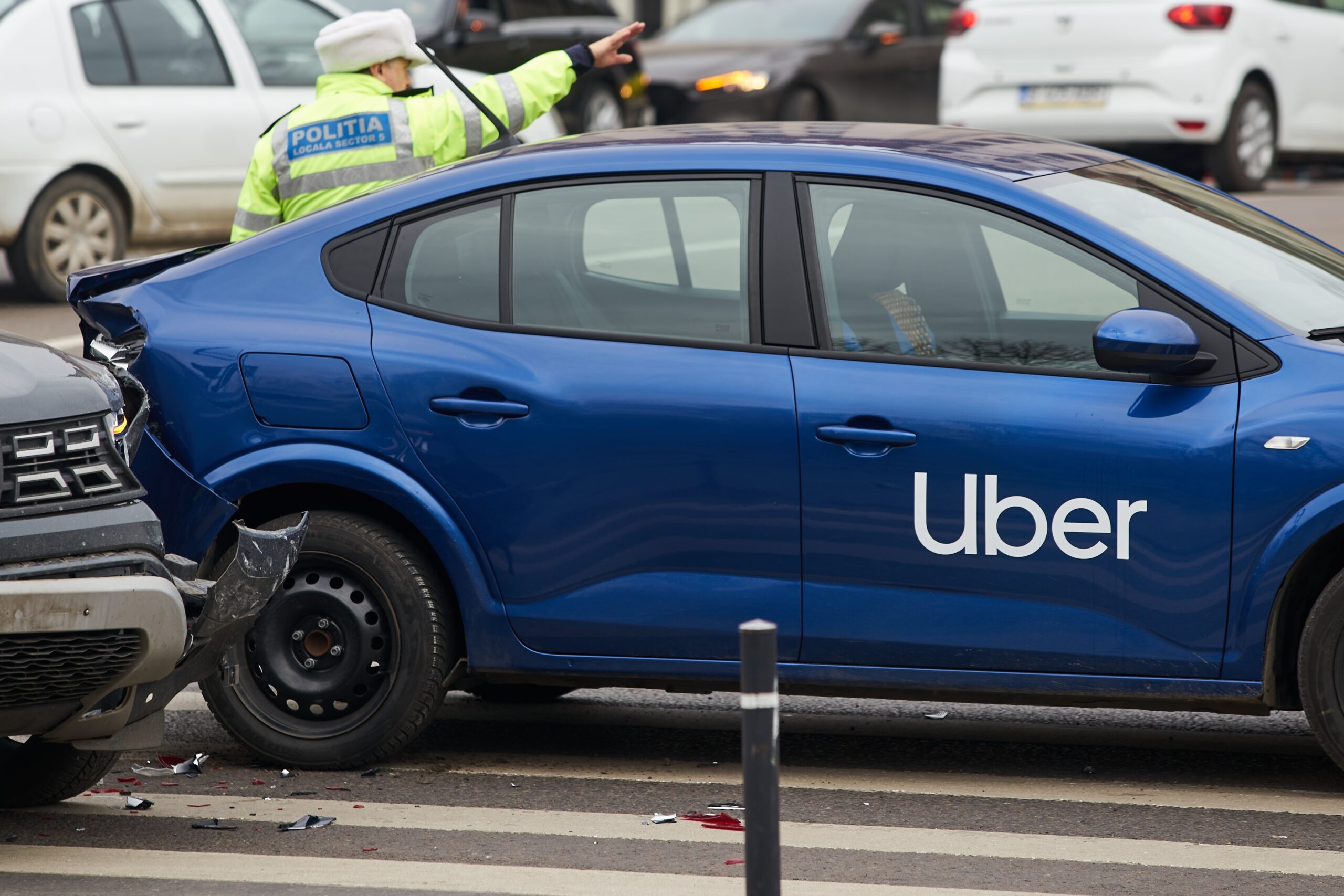
A major difference in a rideshare accident vs. a car accident claim in Texas is the type of evidence needed to win. In a regular crash, you look at skid marks and witness statements. In a rideshare crash, the most valuable evidence is digital.
Rideshare accident evidence preservation in San Antonio requires immediate legal action to stop the tech company from deleting the data that proves your case.
Uber and Lyft collect massive amounts of telemetry data on every trip.
This data reveals the driver's speed, braking patterns, and whether they were interacting with the app interface at the second of impact. However, this information is stored on corporate servers and is not part of the standard police report.
- GPS Telemetry: This shows the exact route and speed, which can prove if the driver was rushing to complete a "surge" fare or a quest.
- App Interaction Logs: These logs confirm if the driver was looking at a "new request" notification when they should have been watching the road on Loop 1604.
- RideCheck Data: Rideshare apps have sensors that detect unusual stops or potential crashes; we subpoena these internal alerts to verify the force of the collision.
- Black Box Forensics: We use experts to download data from the vehicle's engine control module to cross-reference it with the app data.
If a formal spoliation letter is not sent within days of the accident, this digital trail can vanish. Our firm acts with the urgency of a trial-ready team to verify that this data is preserved for a Bexar County jury to see.
The Independent Contractor Defense: Piercing the Corporate Shield
In a regular car accident involving a company vehicle, the company is usually liable for the driver's mistakes. In a rideshare case, the tech company will argue that the driver is an independent contractor and therefore, the company cannot be sued for the driver's negligence. This is a strategic barrier designed to protect corporate profits from catastrophic injury lawsuits.
Cowen Law Car & Truck Accident Lawyers rejects this shield. We look for evidence that the company exercised significant control over the driver's behavior. If the app dictates the route, monitors the speed, and penalizes the driver for declining rides, the contractor label may not hold up in court.
- Negligent Hiring: We investigate whether Uber failed to conduct a proper background check on a driver with a known history of reckless behavior.
- Dangerous App Design: We may argue the app's interface is inherently distracting, making the company directly liable for the resulting distraction.
- Failure to Supervise: If the company ignored data showing a driver was habitually speeding through Southtown or the Pearl District, they shared in the negligence.
Challenging these corporate structures is a hallmark of our trial practice. We possess the financial war chest to litigate these complex theories against the world's largest technology firms.
Proportionate Responsibility in Texas Courts
Texas law follows the 51% bar rule for proportionate responsibility under Texas Civil Practice and Remedies Code Section 33.001.
- In a regular car accident, the defense might try to blame you for not wearing a seatbelt. In a rideshare claim, the defense will use every resource to shift even a small percentage of fault onto you to save millions of dollars.
- Corporate defense lawyers are professionals at finding ways to blame the victim. They might claim you distracted the driver or that you chose to get into a vehicle with an obviously impaired operator.
- Rideshare policies are so large that the blame the victim strategy is much more aggressive than in a standard $30,000 car insurance claim.
Our firm uses accident reconstructionists and human factors experts to confirm that the fault lies squarely with the negligent driver and the company that put them on the road.
We prepare every case for the Bexar County Justice Center to verify that a jury hears the objective truth about what caused your injuries.
FAQ: Rideshare Accident vs Car Accident Claim Texas
Why is a rideshare accident claim harder to handle than a regular car accident in Texas?
A regular car accident is usually a two-party dispute with clear insurance coverage. A rideshare claim involves multiple layers of insurance, corporate defendants hiding behind "independent contractor" status, and ephemeral digital evidence. You aren't just fighting a driver; you are fighting a global tech company's legal department.
How much insurance is available in a San Antonio rideshare accident?
If the driver was on an active trip or en route to a passenger, there is usually a $1 million commercial liability policy available. If the driver was just waiting for a ride, the limits are lower (typically $50,000/$100,000). If the app was off, only the driver's personal insurance applies.
Can I sue Uber or Lyft directly for my injuries?
Directly suing the company is possible under theories like negligent hiring or dangerous app design. However, most victims recover through the company's insurance policies. We investigate the facts to determine if a direct lawsuit against the parent corporation is the best path for your recovery.
What if the Uber driver's personal insurance denies my claim?
This happens frequently because most personal policies have an "exclusive for-hire" clause. If the personal insurer denies the claim, we look to the rideshare company's contingent liability or commercial policy to fill the gap. Our attorneys are experts at navigating these denials to find coverage.
What evidence do I need to collect after a rideshare crash on I-35?
Beyond photos of the vehicles and the police report, you must screenshot your ride details in the app immediately. This provides proof of the trip status and the driver's identity. You should also note if the driver was using multiple apps (like Uber and Lyft) at the same time, which is a major distraction factor.
How long do I have to file a rideshare lawsuit in San Antonio?
Texas generally has a two-year statute of limitations for personal injury. However, the "digital clock" on the evidence is much shorter. If you wait months to hire a lawyer, the GPS logs and app data that could win your case might be deleted by the tech company.
Secure Your Future with The Trucking Trial Lawyers
A catastrophic rideshare accident requires a level of legal firepower that most general personal injury firms cannot provide.
Cowen Law Car & Truck Accident Lawyers delivers the resilient advocacy and technical experience needed to win against massive corporate adversaries. We combine our deep knowledge of the transportation industry with a genuine commitment to our clients, verifying that no tech giant can hide from the truth.
What would it mean for your family to have a trial-ready legal team fighting for your recovery while you focus on healing?
Contact Cowen Law Car & Truck Accident Lawyers today for a free consultation. There is no cost to you unless we recover money for your claim.
Call us at (210) 941-1306 for a free consultation or contact us below. No cost to you unless we win.